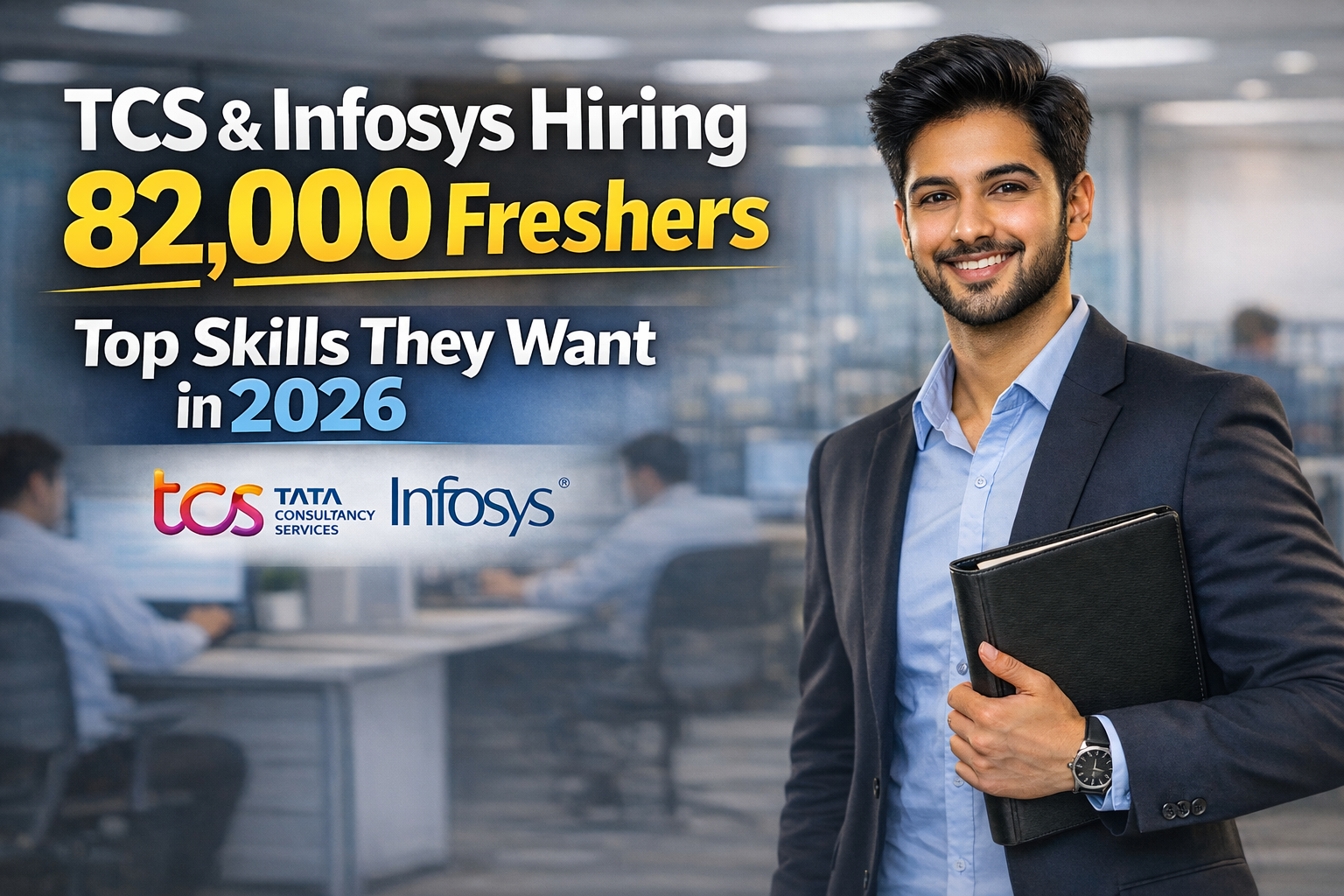
India’s IT hiring market is showing fresh momentum, and this time the spotlight is firmly on entry-level talent. With TCS and Infosys among the companies driving large-scale fresher recruitment, the message is clear: opportunities are opening up again for graduates who are ready to enter the technology workforce. Recent reports indicate that the country’s top IT firms are planning major fresher intake in FY26, signalling a stronger demand environment after a period of cautious hiring.
But there is an important shift in this hiring wave. Companies are no longer looking at degrees alone. They are increasingly focusing on whether candidates have the skills needed for a changing technology landscape shaped by artificial intelligence, cloud computing, digital engineering, data, cybersecurity, and automation. TCS’s entry-level hiring pages highlight future-focused domains such as AI and data, cloud, cybersecurity, and enterprise solutions, while Infosys continues to emphasise digital capability-building and continuous learning as part of its talent strategy.
In this blog, we will look at what this hiring push really means, which skills TCS and Infosys appear to value most, and how freshers can prepare themselves to stand out in a crowded applicant pool.
Why Fresher Hiring is Back in Focus?
India’s IT hiring cycle is beginning to regain strength, and freshers are once again becoming an important part of that recovery. Recent reporting suggests that India’s top IT services companies are planning a sharp rise in fresher hiring in FY26, signalling that firms are preparing for future delivery needs rather than relying only on lateral recruitment. This matters because fresher hiring is often one of the clearest signs that companies are feeling more confident about medium-term demand.
A major reason behind this shift is the changing nature of technology work itself. Companies are now building teams for an environment shaped by artificial intelligence, cloud platforms, cybersecurity, digital engineering, enterprise transformation, and data-led services. TCS’s India careers pages currently position the company around “AI-driven opportunities” and an “AI-ready future,” while Infosys presents its graduate hiring ecosystem as an “AI-first career” supported by AI-powered learning and development.
This means fresher hiring is not just about filling large numbers of entry-level seats. It is also about creating a pipeline of talent that can be trained for newer business areas. TCS’s official hiring pages highlight domains such as AI and data, cloud, cybersecurity, and other digital roles, while Infosys continues to stress future-ready skills, continuous learning, and digital capability-building for graduates.
For students and recent graduates, this creates a clear message: the hiring market may be opening up, but companies are looking for candidates who can fit into the next phase of IT services, not the old one. The comeback in fresher hiring is therefore closely tied to the rise of AI-led and digital-first business demand.
Top Technical Skills They Are Looking For
As TCS and Infosys expand fresher hiring, one thing is becoming very clear: companies are no longer looking only for candidates with a degree and basic subject knowledge. They want freshers who understand where the IT industry is heading and who have started building relevant technical skills accordingly.
The good part is that you do not need to master everything at once. But you do need to show that you are learning skills that match today’s technology environment. From AI and cloud to cybersecurity and programming, the focus is increasingly on practical, future-ready knowledge.
Here are some of the top technical skills that freshers should pay attention to.
Artificial Intelligence and Machine Learning
Artificial intelligence is no longer a niche area. It is now becoming part of how companies build products, automate tasks, improve customer support, and analyse business problems. That is why freshers with even a basic understanding of AI are likely to stand out.
What to learn?
- Basics of artificial intelligence and machine learning
- Common AI use cases in business
- Prompting, automation, and AI tools
- Introductory Python for AI-related tasks
Why it matter?
- AI is influencing almost every part of the technology industry
- Companies want talent that can work in AI-enabled environments
- Even non-specialist roles increasingly require AI awareness
Cloud Computing
Cloud has become a core part of modern IT services. Businesses now depend on cloud platforms for storage, applications, development, and digital operations. Freshers who understand cloud basics can appear more job-ready.
What to learn?
- Basics of cloud computing
- Difference between public, private, and hybrid cloud
- Introduction to AWS, Azure, or Google Cloud
- Cloud services, deployment, and storage concepts
Why it matters?
- Many IT projects now run on cloud-based infrastructure
- Cloud knowledge is useful across software, support, data, and enterprise roles
- It shows familiarity with modern business technology systems
Data Analytics and Data Handling
Data skills are becoming important even for entry-level roles. Companies want employees who can read information, work with datasets, and draw simple insights from numbers.
What to learn?
- Excel and advanced Excel
- SQL basics
- Data visualisation tools
- Introductory data analysis concepts
- Basics of Python for data work
Why it matters?
- Data supports decision-making in almost every business function
- Many digital roles require comfort with numbers and dashboards
- Strong data basics can open pathways into analytics and business intelligence roles
Cybersecurity
As businesses become more digital, security becomes more important. Companies need people who understand safe systems, secure practices, and the basics of protecting data and networks.
What to learn?
- Basics of cybersecurity
- Common security threats and vulnerabilities
- Safe coding and secure digital practices
- Network security fundamentals
- Basic awareness of security tools and frameworks
Why it matters?
- Cybersecurity is now essential across industries
- Security awareness is valuable even outside specialist roles
- It reflects seriousness about working in professional IT environments
Programming Fundamentals
No matter how much the industry evolves, programming remains one of the strongest foundations for a fresher entering IT. Even if a role is not purely development-focused, coding knowledge improves logic, problem-solving, and technical confidence.
What to learn?
- One or two core languages such as Python, Java, or C++
- Data structures and algorithms basics
- Object-oriented programming
- Problem-solving practice
- Basic debugging skills
Why it matters?
- Coding is still central to many fresher hiring processes
- Strong fundamentals make learning other tools easier
- It helps in interviews, assessments, and on-the-job training
Automation and Digital Tools
Companies are also looking for people who can work smarter, not just harder. Automation tools and digital workflows are becoming common across technology and business functions.
What to learn?
- Basic scripting
- Workflow automation tools
- Version control tools such as Git
- Collaboration platforms and project tools
- Basic understanding of APIs and integrations
Why it matters?
- Automation improves efficiency in real work environments
- It shows practical understanding beyond theory
- It prepares candidates for digital-first workplaces
What does this mean for Freshers?
The main message is simple: employers are looking for freshers who are ready to grow into the future of IT, not just fit into the past. You do not need to become an expert in all of these areas before applying. But having exposure to some of them can make your profile much stronger.
A smart approach would be to:
- Build strong programming basics first
- Add one future-focused skill such as AI, cloud, or data
- Work on small practical projects
- Mention tools and certifications clearly in your resume
That combination can make you look far more prepared than someone who depends only on their degree.
Non-Technical Skills That Still Matter a Lot
Technical skills may help freshers get noticed, but non-technical skills often determine who actually performs well in the hiring process and later at work. Companies such as TCS and Infosys are not just hiring people who can code or understand tools. They are also looking for candidates who can communicate clearly, solve problems, work with teams, and adapt to changing business needs.
In large IT companies, freshers usually work in team-based environments, client-facing situations, project deadlines, and fast-changing workflows. That is why non-technical skills continue to matter just as much as technical knowledge. In many cases, two candidates may have similar degrees and similar marks, but the one with better communication, confidence, and learning ability often leaves a stronger impression.
Here are some of the most important non-technical skills freshers should focus on.
Communication Skills
Good communication is one of the most valuable skills in any job. Freshers need to express ideas clearly, understand instructions properly, and interact professionally with team members and managers.
What it includes?
- Clear spoken communication
- Basic professional writing
- Email etiquette
- Explaining ideas in a simple way
- Active listening
Why it matters?
- IT jobs often require teamwork and regular reporting
- Candidates with good communication usually perform better in interviews and group discussions
- Clear communication reduces confusion and improves work quality
Problem-Solving Ability
Employers value candidates who can think through a situation instead of getting stuck at the first difficulty. Even in entry-level roles, freshers are expected to approach tasks logically and look for possible solutions.
What it includes?
- Analytical thinking
- Breaking problems into smaller parts
- Asking the right questions
- Using logic before jumping to conclusions
- Learning from mistakes
Why it matters?
- IT and digital roles often involve troubleshooting and decision-making
- Companies want employees who can handle challenges calmly
- Problem-solving shows maturity and practical thinking
Adaptability
The technology industry changes very quickly. Tools, platforms, project requirements, and client expectations can all shift in a short time. Freshers who are open to change usually adjust better in such environments.
What it includes?
- Willingness to learn new tools
- Comfort with changing tasks
- Openness to feedback
- Ability to work in new environments
- Flexibility in handling different types of work
Why it matters?
- Modern workplaces are constantly evolving
- Companies prefer candidates who can grow with change
- Adaptable employees are easier to train for future roles
Teamwork and Collaboration
Most fresher roles in large companies are not isolated roles. Employees work with team leads, managers, developers, testers, analysts, and sometimes even clients. This makes teamwork an essential skill.
What it includes?
- Respecting others’ ideas
- Working smoothly in groups
- Sharing responsibility
- Supporting team goals
- Handling disagreements professionally
Why it matters?
- Most corporate work is team-based
- Good teamwork creates smoother project execution
- Employers look for people who can contribute without creating friction
Learning Mindset
One of the biggest things employers look for in freshers is the ability to learn. Companies know that not every graduate will come fully prepared. What they want is someone who is curious, trainable, and willing to improve continuously.
What it includes?
- Curiosity
- Self-learning habits
- Interest in improving skills
- Willingness to accept guidance
- Consistency in learning
Why it matters?
- Freshers usually grow through training and project exposure
- A strong learning mindset helps candidates stay relevant
- It shows long-term potential rather than just short-term preparation
Professionalism and Work Discipline
Many candidates focus only on technical preparation and forget that companies also notice attitude and behaviour. Professionalism can make a big difference from the interview stage itself.
What it includes?
- Punctuality
- Polite behaviour
- Responsibility
- Respect for deadlines
- Seriousness towards work
Why it matters?
- Companies want dependable employees
- Professional behaviour creates trust
- It reflects readiness for a corporate environment
What Freshers should understand?
A lot of students think non-technical skills are secondary, but that is not true. In reality, these skills often shape how confidently a candidate presents themselves and how effectively they work after getting hired. Technical knowledge may help you clear assessments, but communication, adaptability, teamwork, and professionalism often help you succeed in the workplace.
A smart fresher should therefore focus on both sides:
- Build technical skills for the role
- Build non-technical skills for long-term career growth
That combination is what makes a candidate truly job-ready.
Degrees Alone Are Not Enough Anymore
For many years, students believed that getting the right degree was the main step towards getting hired in a top IT company. A B.Tech, BCA, MCA, or similar qualification was often seen as the key requirement, and once that box was checked, the next expectation was that the company would provide all the training needed after recruitment. That mindset is changing.
Today, companies such as TCS and Infosys are hiring in a much more competitive and skill-focused environment. A degree still matters because it gives candidates academic eligibility and foundational knowledge, but it no longer guarantees that a candidate will stand out. What increasingly makes the difference is whether a fresher has built skills beyond the classroom.
This shift has happened because the workplace itself has changed. The IT industry now operates in an environment shaped by artificial intelligence, cloud computing, automation, analytics, cybersecurity, and digital transformation. Companies need employees who can adapt to these changes quickly. As a result, they are paying closer attention to practical readiness, learning ability, and skill application rather than only academic credentials.
That is why two candidates with the same degree may be viewed very differently. One may simply hold the qualification, while the other may also have hands-on projects, certifications, coding practice, cloud exposure, data skills, or familiarity with AI tools. Naturally, the second candidate appears more job-ready.
A degree gives you entry, not an advantage. A college degree can help you meet the basic eligibility criteria for hiring, but it is often only the starting point. It gets your profile considered, but it does not automatically make you the strongest candidate.
Why this matters?
- Many applicants may have similar degrees and marks
- Recruiters need stronger ways to differentiate candidates
- Skills, projects, and practical exposure help you stand out
Companies now prefer proof of skills
Employers increasingly value candidates who can demonstrate what they know. This does not always mean work experience. For freshers, it can mean projects, internships, certifications, coding profiles, portfolios, or even well-explained academic work.
What can count as proof?
- Small technical projects
- Internship experience
- Online certifications
- GitHub or portfolio work
- Participation in coding or tech challenges
College learning is often not enough by itself
Many students realise that their college syllabus does not fully match the tools and technologies being used in industry today. This is why self-learning has become so important.
What students often need to learn outside the classroom:
- Modern programming tools
- Cloud and digital platforms
- AI and automation basics
- Practical problem-solving
- Industry-relevant software and workflows
Learning attitude matters more than ever
Companies understand that freshers are still at the beginning of their careers. They do not expect perfection. But they do expect willingness to learn, improve, and keep up with change.
What employers want to see?
- Curiosity about new technology
- Effort beyond the syllabus
- Openness to feedback
- Ability to learn quickly
- Interest in continuous upskilling
What Freshers Should Take From This
The message is not that degrees have no value. They still matter. But in the current hiring environment, a degree alone is not enough to make a candidate job-ready. Employers are looking for people who combine academic knowledge with practical skills, curiosity, and the ability to grow.
For freshers, this is actually a useful shift. It means your future does not depend only on your college name or your marks. You can strengthen your profile by learning relevant tools, doing projects, and building skills that reflect what the industry needs today. In simple terms, the degree may open the door, but your skills are what help you walk through it.
Here are some of the most important things freshers should start learning right now.
Strengthen your programming basics
Programming remains one of the strongest foundations for anyone entering the IT industry. Even if you later move into cloud, data, AI, or cybersecurity, basic coding skills will continue to help you.
What to focus on?
- One core language such as Python, Java, or C++
- Data structures and algorithms basics
- Logical problem-solving
- Basic debugging and code understanding
Why should this come first?
- It builds technical confidence
- It helps in hiring tests and interviews
- It makes advanced tools easier to learn later
Learn one high-demand domain
Instead of trying to learn every trending skill, freshers should choose one area that is currently in demand and build beginner-level comfort in it.
Some good options include:
- Cloud computing
- Data analytics
- Artificial intelligence basics
- Cybersecurity fundamentals
- Automation tools
Why this matters?
- It gives direction to your preparation
- It makes your profile more focused
- It shows recruiters that you are learning with purpose
Build small practical projects
Learning theory is not enough anymore. Even freshers need to show some practical application of what they know. Small projects can make a big difference in how your profile looks.
Examples of useful beginner projects:
- A simple Python-based application
- A basic data dashboard in Excel or Power BI
- A small cloud-based deployment project
- A chatbot or AI tool experiment
- A portfolio website or GitHub repository
Why projects matter?
- They prove that you can apply concepts
- They make your resume stronger
- They give you real examples to talk about in interviews
Become comfortable with digital tools
Modern workplaces expect freshers to be comfortable with more than just textbooks and assignments. You should know how to work with commonly used digital and collaborative tools.
Useful tools to start with:
- Git and GitHub
- Excel
- Power BI or Tableau basics
- Collaboration tools such as Teams or similar platforms
- Basic documentation and presentation tools
Why this matters?
- It reflects workplace readiness
- It helps you adapt faster after joining
- It shows practical awareness of professional environments
Improve communication alongside technical learning
A lot of students focus only on technical preparation and ignore how they speak, write, and present themselves. That can become a weakness during interviews and group discussions.
What to work on?
- Speaking clearly and confidently
- Writing basic professional emails
- Explaining projects in a simple way
- Answering interview questions with structure
- Listening carefully and responding thoughtfully
Why this matters?
- Good communication improves interview performance
- It helps you present your skills better
- It makes you appear more confident and job-ready
Stay consistent with self-learning
The biggest advantage a fresher can build today is the habit of continuous learning. Technology changes quickly, and the students who keep learning regularly are usually the ones who stay ahead.
How to do this?
- Spend time each week learning one skill
- Follow a simple learning schedule
- Take beginner-friendly online courses
- Revise and practice regularly
- Keep updating your resume with new skills and projects
Why this matters?
- Consistency creates stronger results than random effort
- It helps you stay relevant in a changing industry
- It shows seriousness and discipline
A Simple Way to Approach It
If you are confused about where to begin, keep it simple.
Start by:
- Building strong programming basics
- Choosing one future-focused skill area
- Creating two or three small projects
- Practising communication and interview skills
- Learning regularly instead of preparing only at the last minute
This kind of approach can make a fresher profile much stronger over time. The companies hiring today are not only looking for degrees. They are looking for signs of readiness, curiosity, and effort. That means what you start learning now can directly shape the opportunities you are able to access later.
Best Roles Freshers Can Target in TCS and Infosys
When students hear that large IT companies are hiring freshers, they often imagine only one kind of job: a general software role. But the reality is much broader now. Companies such as TCS and Infosys are hiring across multiple technology and business functions, which means freshers have more than one possible entry route. This is useful because not every student has the same strengths, interests, or learning background.
Some freshers may be stronger in coding. Some may be more interested in data. Others may prefer cloud, cybersecurity, testing, or enterprise support roles. The important thing is to understand that large IT firms do not hire only for one fixed profile. They build teams across many areas, and that creates different opportunities for freshers who are willing to prepare well.
Here are some of the best roles freshers can realistically target.
Software Developer or Software Engineer
This remains one of the most common entry-level roles for freshers. It usually involves coding, debugging, testing, maintaining applications, and supporting development teams.
Who this suits?
- Students with strong programming interest
- Candidates who enjoy logic and problem-solving
- Those preparing in languages such as Java, Python, or C++
Why it is a good option?
- It gives a strong technical foundation
- It opens pathways into many advanced roles later
- It remains one of the most recognised fresher entry routes
Data Analyst or Data Support Roles
As data becomes central to business decisions, fresher-level roles related to data are also becoming more important. These roles may involve handling datasets, preparing reports, creating dashboards, or supporting analytics teams.
Who this suits?
- Students comfortable with numbers and patterns
- Candidates interested in Excel, SQL, and visualisation tools
- Those who want to move towards analytics or business intelligence
Why it is a good option?
- Data skills are in demand across industries
- It combines technical and business understanding
- It can lead to strong future growth in analytics fields
Cloud and Infrastructure Support Roles
Cloud has become a major part of IT service delivery, so freshers with cloud basics can target entry-level roles linked to infrastructure, deployment, and support.
Who this suits?
- Candidates interested in how digital systems are hosted and managed
- Students learning AWS, Azure, or Google Cloud basics
- Those who want a role connected to modern enterprise systems
Why it is a good option?
- Cloud knowledge is increasingly valuable
- It aligns well with current business demand
- It creates opportunities in both technical support and advanced cloud careers
Cybersecurity Roles
Cybersecurity is becoming important across almost every digital business environment. While specialist security roles may require deeper expertise, freshers can still begin with support or junior-level cybersecurity pathways.
Who this suits?
- Students interested in secure systems and digital safety
- Candidates who enjoy investigation, systems thinking, and technical awareness
- Those learning basics of networks, threats, and security principles
Why it is a good option?
- Security demand is growing continuously
- It is a high-value domain for long-term career building
- Even foundational knowledge in this area can help a fresher stand out
Testing and Quality Assurance Roles
Not every strong IT career starts in software development. Testing and quality assurance roles are also important and can be a good entry route for freshers.
Who this suits?
- Candidates who are detail-oriented
- Students who enjoy identifying errors and improving quality
- Those interested in software performance and reliability
Why it is a good option?
- It helps develop a strong understanding of software systems
- It can later lead into automation testing and other specialised roles
- It remains a practical entry point into the IT industry
Business and Enterprise Technology Roles
Large companies also hire for roles connected to enterprise systems, digital operations, consulting support, process transformation, and technology-enabled business services.
Who this suits?
- Students who are interested in both business and technology
- Candidates with communication and analytical strengths
- Those who may not want purely coding-based roles
Why it is a good option?
- It combines technical awareness with business understanding
- It can suit candidates from mixed academic backgrounds
- It offers growth into consulting, business analysis, and enterprise solution roles
How Freshers Should Think About These Roles
The best role is not simply the one that sounds the most impressive. It is the one that matches your skills, interests, and preparation. A fresher who enjoys coding and has practised programming may be better suited to software roles. Someone strong in numbers and dashboards may be more suited to data roles. Someone interested in systems and digital infrastructure may find cloud or cybersecurity more meaningful.
So instead of applying everywhere without direction, freshers should try to do three things:
- Understand the broad types of roles available
- Identify which one suits their strengths
- Prepare skills and projects around that path
This approach makes preparation more focused and increases the chance of standing out in a competitive hiring process. In the current hiring environment, the biggest advantage is not just applying early. It is applying with clarity about the role you are aiming for and the skills that support it.
How to Stand Out From Other Applicants
When large companies such as TCS and Infosys announce big fresher hiring plans, it naturally creates excitement among students and recent graduates. But it also creates intense competition. Thousands of candidates may apply for the same opportunities, and many of them may have similar degrees, similar marks, and similar resumes. In that kind of environment, standing out becomes extremely important.
The good thing is that standing out does not always mean being extraordinary. It often means being better prepared, more focused, and more intentional than the average applicant. Small efforts, when done properly, can create a much stronger impression than most students realise.
Here are some of the most effective ways freshers can stand out.
Build a Resume Around Skills, Not Just Qualifications
Many fresher resumes look almost identical. They list education, marks, and a few generic strengths, but they do not clearly show what the candidate can actually do. A stronger resume is one that reflects practical skills and relevant effort.
What to include?
- Technical skills you genuinely know
- Small projects you have completed
- Certifications relevant to the role
- Internship experience, if any
- Tools and platforms you have used
Why it helps?
- It shows more than academic eligibility
- It gives recruiters a clearer picture of your strengths
- It makes your profile look more job-ready
Work on Practical Projects
Projects are one of the best ways to show initiative. Even a small project can make a fresher profile look much stronger because it proves that learning has moved beyond theory.
What kind of projects can help?
- A small coding application
- A dashboard using Excel or Power BI
- A beginner-level AI or chatbot project
- A cloud deployment exercise
- A simple website or portfolio
Why it helps?
- Projects show real application of knowledge
- They give you something meaningful to discuss in interviews
- They make your learning more visible and credible
Choose One Strong Area of Focus
A common mistake freshers make is trying to mention every possible trending skill. This can make the profile look scattered. It is usually better to build strength in one main area and then support it with basics in other areas.
For example:
- Strong programming plus AI basics
- Data skills plus Excel and SQL
- Cloud basics plus scripting
- Cybersecurity fundamentals plus networking basics
Why it help?
- A focused profile looks more serious
- It makes your preparation more strategic
- Recruiters can more easily understand where you fit
Improve Your Communication and Interview Readiness
A candidate may have good technical knowledge but still lose an opportunity because they cannot explain themselves well. Communication plays a major role in hiring, especially for freshers.
What to practise?
- Introducing yourself confidently
- Explaining projects clearly
- Answering common interview questions
- Speaking in a structured and professional way
- Listening carefully before responding
Why it helps?
- Good communication improves first impressions
- It helps recruiters see your confidence and clarity
- It allows you to present your skills more effectively
Show Proof of Continuous Learning
Companies value freshers who are actively learning, especially in a fast-changing technology environment. Showing that you are trying to improve regularly can make a big difference.
How to show this?
- Complete relevant online courses
- Earn beginner-friendly certifications
- Update your LinkedIn profile
- Maintain a GitHub profile, if relevant
- Keep learning new tools step by step
Why it helps?
- It reflects seriousness and discipline
- It shows that you are not depending only on your degree
- It signals long-term potential
Apply With Clarity, Not Randomly
Many students apply to every role they see without understanding whether the role matches their skills. This usually weakens preparation and reduces confidence during the hiring process.
A better approach is to:
- Understand which roles suit your strengths
- Tailor your resume to that direction
- Learn the skills most relevant to that role
- Prepare role-specific interview answers
Why it helps?
- Focus improves quality of preparation
- You appear more aligned with the opportunity
- It increases your chances of performing better in interviews
What Freshers Should Remember
Standing out is not about being perfect. It is about showing effort, direction, and readiness. Recruiters know that freshers are still learning. They do not expect years of experience. But they do notice which candidates have taken their preparation seriously.
In a competitive hiring market, the students who stand out are usually the ones who:
- Learn beyond the syllabus
- Build small but real projects
- Communicate clearly
- Stay consistent in upskilling
- Apply with purpose
That is what turns a fresher from just another applicant into a candidate worth noticing.
Expert Corner
In the end, the hiring push from TCS and Infosys is encouraging news for freshers, but it also comes with a clear message: opportunities are growing, yet companies are looking for candidates who bring more than just a degree. Technical skills, communication, adaptability, practical projects, and a willingness to keep learning are becoming the real differentiators in today’s IT job market. For students and graduates, this means the goal should not only be to apply widely, but to prepare smartly and build a profile that matches the future of the industry.