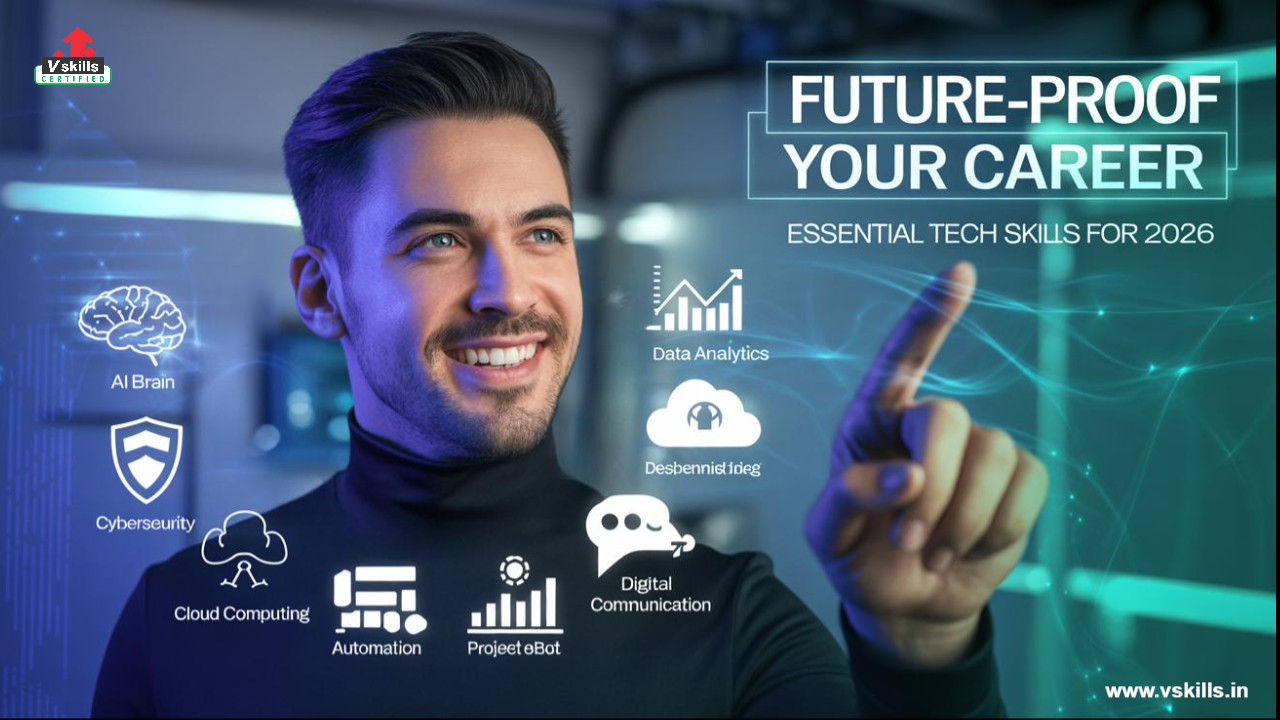
The job market is shifting faster than most people realise. Roles that once felt stable are being reshaped by automation, AI-powered tools, and cloud systems that can run whole workflows on their own. Hiring managers aren’t just asking what you know anymore. They want to see how quickly you can learn, adapt, and use technology to get things done. By 2026, this shift will hit a major turning point. AI will move from being a “nice-to-have” add-on to a core part of everyday work. Automation will spread deeper into industries that were once considered safe from tech disruption. Cloud adoption will mature, making digital skills the backbone of almost every job, not just tech roles. Career can no longer rely on one speciality or a single area of expertise.
The people who thrive will be those who stay curious, pick up new tools with confidence, and understand how technology supports smarter decisions. The ones who don’t move with the change risk getting stuck, while others rise. If you’re wondering how to stay relevant, grow your value, and protect your career from surprise shifts, you’re in the right place. The skills you build today can shape your opportunities for years to come — and the sooner you start, the better prepared you will be.
The way we work is changing at a speed that’s hard to ignore. Tasks that used to take hours are now finished in minutes with AI-powered tools. Meetings that once required a room full of people can happen asynchronously with shared documents, automated minutes, and dashboards that update themselves. Technology isn’t something sitting in the background anymore. It’s woven into almost every part of daily work, whether you’re in marketing, finance, operations, HR, or customer support.
AI is becoming the quiet partner in every role. It drafts emails, analyses data, explains trends, flags mistakes, and even helps plan projects. What started as optional tools is quickly turning into expectations. Companies want employees who can work with AI the same way they work with spreadsheets or email.
At the same time, businesses are moving toward cloud-first environments. Instead of clunky software installed on individual machines, teams now rely on cloud platforms that update automatically, sync across devices, and allow real-time collaboration. This shift means employees no longer need deep technical mastery, but they must be comfortable navigating digital systems and understanding how different tools interact.
Another big change is how decisions are made. Gut feeling isn’t enough anymore. Leaders want numbers, patterns, and insights. Data dashboards and analytics tools help teams spot problems earlier and make smarter choices. This has created a huge demand for people who can read, interpret, and act on data — even at a basic level.
Why Future-Proofing Matters More Than Ever?
The biggest expectation of all is adaptability. Companies want people who learn fast, experiment with new tools, and aren’t intimidated by change. According to several global workforce studies, more than 70% of jobs in the coming years will require a blend of technical and domain knowledge. It doesn’t mean everyone needs to code. It means a marketing professional who understands analytics, a finance analyst who can work with automation tools, or a project manager who knows how to run AI-assisted workflows will be far more valuable.
Automation is already reshaping industries. In finance, AI is handling fraud detection and risk predictions. In healthcare, smart systems help with scheduling, diagnostics, and patient data management. Retail relies on automated inventory and customer behaviour tracking. Manufacturing uses sensors and predictive maintenance to keep machines running longer with fewer errors. The pattern is clear: the work that’s predictable gets automated. The work that’s strategic, creative, or deeply human becomes more important — and more rewarding.
The good news is that you don’t have to become an engineer to stay relevant. You just need to understand the tools that support modern workplaces and use them confidently. A little digital fluency goes a long way. Once you know how these systems work, you’re not just keeping up. You’re positioning yourself for stronger opportunities, better roles, and long-term career stability.
Most Essential Tech Skills for Career in 2026
Technology is reshaping every workplace, and the people who thrive are the ones who blend their domain expertise with strong digital fluency. Below are the skills that will dominate hiring conversations in 2026, along with what you need to learn, who’s hiring, and how these skills boost your career.
1. Career in AI Literacy and Prompting Skills
AI has become a daily companion at work. By 2026, using AI won’t be a bonus — it will be a basic expectation.
What This Skill Includes
- Writing effective prompts
- Using AI for planning, content creation, analysis, and decision support
- Understanding how to refine, verify, and correct AI output
- Automating routine tasks with AI tools
- Collaborating with AI in productivity suites like Microsoft 365 Copilot, Google Workspace AI, or Notion AI
Skills Required
- Clear communication
- Analytical thinking
- Ability to break tasks into steps
- Basic familiarity with generative AI tools
- Curiosity and willingness to experiment
Educational Background
- Business
- Marketing
- Computer Science
- Mass Communication
- Any field with strong writing or analytical work
AI literacy does not require engineering or programming knowledge.
Companies That Hire for AI-Literate Professionals
Pretty much every modern company, including:
- Meta
- TCS, Infosys, Wipro
- Deloitte, EY, KPMG
- Amazon, Flipkart
- Startups and SaaS companies
- Digital marketing agencies
Common Roles
- AI-assisted content creator
- Marketing strategist
- Business analyst
- Operations coordinator
- Project manager
- Customer success professional
Salary Range (Varies by country & role)
- Entry-level: competitive and rising due to demand
- Mid-level: higher pay than traditional roles without AI skills
- Senior roles: premium salaries for people who combine domain expertise + AI fluency
Why It Matters in 2026
AI will handle repetitive tasks and surface insights instantly. Professionals who know how to “talk to AI” become faster, more accurate, and significantly more valuable.

2. Career in Data Skills: Analysis, Visualisation, and Interpretation
Data has become the foundation of business decision-making. You don’t need to be a data scientist — you just need to read, analyse, and communicate insights.
What This Skill Includes
- Reading dashboards
- Using Excel, Power BI, or Tableau
- Recognising trends and patterns
- Basic SQL familiarity
- Presenting data clearly with charts and visuals
- Turning numbers into actionable recommendations
Skills Required
- Critical thinking
- Comfort with spreadsheets
- Basic math and logic
- Problem-solving mindset
- Ability to identify patterns
Educational Background (Helpful but optional)
- Commerce
- Engineering
- Economics
- Statistics
- Business management
Companies That Hire Data-Savvy Professionals
- Accenture
- IBM
- JPMorgan
- Ola, Zomato, Swiggy
- Healthcare and insurance companies
- Manufacturing and supply chain organisations
- Any business running digital workflows
Common Roles
- Business Analyst
- Operations Analyst
- Marketing Analyst
- Financial Analyst
- Project Manager
- Product Coordinator
Salary Range
- Entry-level analysts: solid pay plus fast growth
- Mid-level: strong demand, especially in finance and tech
- Senior: high competition for skilled data interpreters
Why It Matters in 2026
Companies trust decisions backed by numbers. Professionals who speak the “language of data” become indispensable.
3. Career in Cybersecurity Awareness
Cybersecurity is no longer something only IT handles. As workplaces become more digital, employees play a major role in keeping organisations safe.
What This Skill Includes
- Identifying phishing attempts
- Using strong authentication methods
- Recognising suspicious behaviour
- Following secure communication practices
- Understanding basic compliance expectations
Skills Required
- Attention to detail
- Risk awareness
- Good digital hygiene
- Understanding of online behaviour
- Quick decision-making
Educational Background (Not mandatory)
- IT or Computer Science helps, but not required
- Any field can learn cybersecurity basics
Companies That Value Cyber-Aware Employees
- Banks
- IT services
- Ecommerce and retail platforms
- Healthcare and pharmaceuticals
- Government and public sector
- Any remote-first company
Common Roles
- Any role that handles customer data or sensitive information
- Operations
- HR
- Sales
- Customer support
- Administration
Salary Range
Cybersecurity specialists earn high salaries, but even non-tech employees with strong security habits stand out in hiring and promotions.
Why It Matters in 2026
Security risks are increasing. One careless click can cost a company heavily. Cyber-aware employees protect organisations and make themselves valuable.
4. Career in Cloud Fundamentals
Most companies have moved or are moving to cloud-based systems. Understanding how cloud tools work helps people collaborate and work efficiently.
What This Skill Includes
- Navigating tools hosted on AWS, Azure, or Google Cloud
- Understanding shared responsibility models
- Managing files, workflows, and collaborative platforms
- Using cloud-based apps like Slack, Notion, or Salesforce
- Knowing basic security practices for cloud environments
Skills Required
- Tech comfort
- Problem-solving
- Understanding how apps interact
- Ability to learn new tools quickly
Educational Background
- IT backgrounds help, but not required
- Business and management graduates benefit from cloud literacy
Companies That Hire for Cloud Skills
- Microsoft
- Amazon
- Infosys, TCS, Capgemini
- Healthcare, finance, insurance firms
- Logistics and supply chain companies
- SaaS startups
Common Roles
- Cloud-savvy project managers
- CRM administrators
- Business operations
- Technical support
- Product and UX teams
Salary Range
Cloud-related roles are among the highest-paying in the tech ecosystem.
Why It Matters in 2026
Cloud fluency increases collaboration, productivity, and adaptability — essential for modern digital-first workplaces.

5. Career in Automation Tools and No-Code Platforms
Automation tools help professionals eliminate repetitive work and build custom workflows without writing code.
What This Skill Includes
- Creating simple automations using Zapier, Make, Airtable, or Notion
- Building internal tools with no-code platforms
- Automating reports, emails, approvals, and data transfers
- Understanding triggers, actions, and integrations
Skills Required
- Logical thinking
- Curiosity
- Ability to map workflow steps
- Basic understanding of data flow
- Problem-solving
Educational Background
Any field — this area is ideal for beginners and non-technical professionals.
Companies That Hire Automation-Savvy Professionals
- Startups
- Digital agencies
- Product companies
- Real estate
- Finance and fintech
- Ecommerce
Common Roles
- Operations Manager
- Automation Specialist
- No-Code Developer
- Business Analyst
- CRM and workflow coordinator
Salary Range
Automation skills can significantly boost earning potential due to the time and cost savings they create for companies.
Why It Matters in 2026
Automating manual processes helps professionals work faster and focus on higher-value tasks — a major advantage in a competitive job market.
6. Career in Digital Project Management
Work is becoming more distributed. Teams need coordination, clarity, and structures that keep projects moving.
What This Skill Includes
- Using platforms like Asana, Jira, Monday.com, or Notion
- Running Agile or hybrid workflows
- Planning timelines and milestones
- Tracking team performance
- Managing risks and dependencies
Skills Required
- Organisation
- Communication
- Leadership
- Attention to detail
- Analytical thinking
Educational Background
- Management
- Engineering
- Business
- Liberal arts (with experience)
Companies That Hire for These Skills
- IT and software companies
- Consulting firms
- Media and marketing agencies
- Product-led organisations
- Construction and manufacturing
Common Roles
- Project Manager
- Scrum Master
- Product Coordinator
- Delivery Manager
Salary Range
Project managers typically earn above-average salaries because they influence delivery, timelines, and productivity.
Why It Matters in 2026
As remote work grows, teams need strong leaders who can coordinate work across tools and time zones.
7. UX Thinking and Human-Centric Design
UX thinking helps professionals understand how people interact with products, apps, and processes.
What This Skill Includes
- Wireframing basics
- Mapping user journeys
- Understanding user behaviour
- Conducting simple usability checks
- Designing intuitive digital experiences
Skills Required
- Creativity
- Empathy
- Problem-solving
- Visual thinking
- Communication
Educational Background
- Design
- Psychology
- Product
- Communication
- Any field with customer-facing experience
Companies That Hire UX-Aware Professionals
- Product companies
- Ecommerce brands
- Digital agencies
- Fintech
- EdTech
- Healthcare tech
Common Roles
- UX Designer (entry-level)
- Product Manager
- Content Designer
- UX Research Assistant
Salary Range
UX remains one of the most rewarding and high-growth fields.
Why It Matters in 2026
Everything is becoming a digital experience — websites, apps, dashboards, and even internal tools. UX thinkers help companies build products people love and trust.
8. Career in Digital Communication and Collaboration Skills
As work becomes more hybrid, digital communication is becoming a core professional skill.
What This Skill Includes
- Writing clear, concise messages
- Communicating asynchronously
- Using tools like Slack, Teams, or Zoom effectively
- Breaking complex ideas into simple explanations
- Collaborating smoothly across locations
Skills Required
- Writing clarity
- Emotional intelligence
- Active listening
- Understanding team dynamics
- Ability to give and receive feedback
Educational Background
Any — communication is universal.
Companies That Hire Communication-Savvy Professionals
Almost all modern organisations, including:
- Remote-first companies
- Service-based companies
- Startups
- Tech consultancies
- Corporate firms
Common Roles
- Team leads
- Managers
- Analysts
- Customer success teams
- Operations
- HR and L&D
Salary Range
Strong communicators advance faster, earn more, and are preferred for leadership roles.
Why It Matters in 2026
Technology can automate tasks, but communication remains deeply human. Teams win or fail based on how well they communicate.
Essential Tech Skills for 2026 — Tabular Summary
| Skill | Skills Required | Educational Background (Helpful, Not Mandatory) | Companies That Hire | Common Roles | Salary Range (General) | Why It Matters in 2026 |
|---|---|---|---|---|---|---|
| AI Literacy & Prompting Skills | Clear communication, analytical thinking, ability to refine prompts, experimenting with AI tools | Business, Marketing, Communication, Computer Science, any field with writing or analysis | Google, Meta, TCS, Infosys, Deloitte, Amazon, SaaS startups, agencies | AI-assisted content creator, business analyst, marketing strategist, ops coordinator | Fast-growing across all levels; higher for mid–senior roles with domain expertise | AI becomes embedded in every tool; employees who “speak AI” work faster and smarter |
| Data Analysis & Visualisation | Critical thinking, Excel/Power BI skills, pattern recognition, basic SQL, storytelling with data | Commerce, Economics, Statistics, Engineering, Business | Accenture, IBM, JPMorgan, Zomato, Swiggy, large enterprises | Business analyst, operations analyst, marketing analyst, project manager | Strong entry pay; high demand across industries | Data-driven decisions replace gut instinct; data-literate employees become indispensable |
| Cybersecurity Awareness | Attention to detail, risk awareness, digital hygiene, responsible online behaviour | IT, Computer Science, any field with digital exposure | Banks, IT services, ecommerce, healthcare, telecom, government | Any role handling sensitive data; admin, HR, sales, ops, support | Cybersecurity specialists earn premium salaries; all employees gain trust & promotion advantage | Rising cyber threats mean organisations rely on security-aware employees daily |
| Cloud Fundamentals | Comfort with web tools, problem-solving, understanding apps & workflows, basic cloud concepts | IT, Engineering, Business, Management | AWS, Microsoft, Google Cloud, TCS, Infosys, Capgemini, SaaS firms | Cloud-savvy PMs, CRM admins, ops specialists, product teams | Cloud roles remain among the highest paying | Cloud-first workplaces need employees who can navigate digital systems confidently |
| Automation & No-Code Tools | Logical thinking, curiosity, workflow mapping, basic data understanding | Any field; ideal for non-tech backgrounds | Startups, digital agencies, fintech, ecommerce, real estate, SaaS | Automation specialist, no-code creator, BA, operations manager | Rapidly rising demand; automators save companies huge costs | Automating repetitive tasks boosts productivity and frees time for strategic work |
| Digital Project Management | Organisation, leadership, communication, risk handling, tool proficiency (Asana/Jira) | Management, Engineering, Business, Liberal Arts (with experience) | IT firms, consulting, product companies, marketing agencies | Project manager, scrum master, delivery manager, product coordinator | Above-average salaries with faster career growth | Distributed teams need strong coordinators who keep projects on track |
| UX Thinking & Human-Centric Design | Creativity, empathy, visual thinking, problem-solving, user journey mapping | Design, Psychology, Communication, Product, customer-focused fields | Product companies, fintech, edtech, ecommerce, digital agencies | UX designer, UX researcher, content designer, product roles | UX remains a high-growth, well-paid career area | Everything is becoming a digital experience — UX thinkers build products people trust |
| Digital Communication & Collaboration | Strong writing, clear messaging, async communication, emotional intelligence, listening skills | Any educational background | Remote-first companies, corporates, startups, consulting, IT | Team leads, analysts, ops, HR, customer success, managers | Better pay and faster promotions due to leadership potential | Tech can automate tasks, but communication stays human; teams depend on clarity |
What skills complement Tech?
Mastering software or AI tools is important, but the people who stand out in 2026 will be those who blend technical abilities with strong human skills. Companies aren’t just looking for someone who knows how to use new tools. They want people who can connect the dots, understand real-world problems, and guide technology toward meaningful outcomes.
A hybrid profile—tech plus domain strength—is becoming the new career blueprint.
Why Hybrid Skills Matter?
Technology is powerful, but it still needs human judgment. Algorithms can process millions of data points, yet they can’t fully grasp context. Automation can execute tasks, but it can’t decide what should be automated or interpret subtleties in human behavior. That’s where complementary skills come in.
Think of it this way – AI can generate 20 ideas in a second, but it still takes a human to recognise which one actually solves the problem, fits the market, or aligns with the business. Below is a breakdown of key complementary skills that boost your tech profile and make you indispensable in the workplace.
1. Problem-Solving
Strong problem-solvers don’t just identify issues; they understand root causes, map out solutions, and evaluate the impact. In a tech-driven environment, this means being able to translate a business problem into a digital solution.
How it amplifies tech skills: You can pair your tech knowledge with the ability to break down complex challenges and choose the right tools. It turns you into the person teams rely on whenever things get stuck.
Examples at work:
- Diagnosing why a workflow is slow and suggesting automation
- Using data insights to fix performance gaps
- Evaluating whether AI is the right solution or a simpler approach will work better
2. Business Reasoning
This is about understanding how companies work—revenue, customers, costs, processes, and strategy. Tech skills without business understanding often yield solutions that are impressive but impractical.
How it amplifies tech skills: You become someone who not only knows how to use a tool but also why it matters to the business. This increases your influence in decision-making and improves your ability to lead projects.
Examples at work:
- Prioritising features based on ROI
- Helping teams avoid unnecessary tech investments
- Translating analytics into clear business actions
3. Creativity
Creativity isn’t just for designers. It’s the ability to look at a situation from a fresh angle and imagine alternatives that others miss. With generative AI now everywhere, creativity has actually become more—not less—valuable.
How it amplifies tech skills: AI can produce countless variations, but your creative instinct helps you filter them, improve them, or combine them into something original.
Examples at work:
- Crafting new customer experiences using AI workflows
- Finding an inventive way to automate a repetitive task
- Reimagining processes instead of simply digitising old ones
4. Emotional Intelligence (EQ)
Tech cannot replace empathy. Teams still need people who can communicate well, understand emotions, manage conflict, and build trust. When workplaces get more digital, EQ becomes the glue that holds everything together.
How it amplifies tech skills: You can present ideas convincingly, collaborate smoothly, and make others comfortable with new tools. This makes you a natural change agent in your organisation.
Examples at work:
- Guiding teammates through technology adoption
- Helping non-technical colleagues feel confident using AI tools
- Leading discussions during stressful project phases
5. Critical Thinking
Critical thinking is your ability to separate signal from noise, question assumptions, evaluate evidence, and avoid jumping to conclusions.
How it amplifies tech skills: AI can produce content or insights quickly, but it doesn’t understand truth, reliability, or ethical implications. Critical thinkers ensure decisions are smart, responsible, and well-informed.
Examples at work:
- Evaluating whether AI-generated insights are biased
- Reviewing dashboards and questioning unexpected trends
- Challenging flawed assumptions during planning sessions
The Real Advantage: Humans Who Can Work With Tech
When you combine technical fluency with strong complementary skills, you become the kind of professional companies fight to hire—adaptable, creative, thoughtful, and ready for whatever the next wave of change brings.
- The future workplace isn’t a competition between humans and AI. It’s a collaboration.
- Tech handles repetition, volume, and speed.
- Humans handle judgment, empathy, nuance, and innovation.
Industries that Will Demand These Skills by 2026
The job market in 2026 won’t be defined by a single industry. Almost every sector is shifting toward tech-enabled operations, smarter workflows, and data-backed decisions. Roles that once relied mainly on experience are now being reshaped by automation, AI tools, digital interfaces, and cloud platforms. To help readers visualise where these skills matter, here’s a look at the industries that are already evolving—and will see even greater demand for tech-ready professionals.
1. Finance
Banks and financial institutions are pushing hard toward automation, advanced analytics, and risk intelligence. Every workflow—from customer onboarding to fraud detection—is being rebuilt using data and AI.
Where the demand will grow?
- AI-driven risk analysis and fraud detection
- Real-time data dashboards for decision-making
- Automated loan processing and customer service
- Digital compliance monitoring
- Blockchain-based settlement systems
What this means for your career?
Even if you’re not a coder, being comfortable with AI dashboards, analytics tools, and digital financial systems will give you a huge edge. Finance teams want people who can read data confidently and act fast.
2. Healthcare
Healthcare is undergoing a digital acceleration. Hospitals, diagnostic centers, and telehealth providers now run on digital records, remote monitoring tools, and AI-driven diagnostics.
Where the demand will grow?
- Telehealth systems and virtual clinic platforms
- Electronic Health Record (EHR) management
- Patient data analytics
- Medical device connectivity and IoT monitoring
- AI-assisted radiology and decision support
What this means for your career?
Healthcare needs professionals who can understand patient data, use digital systems, and support technology-driven care. The mix of compassion plus tech fluency is becoming a powerful combination.
3. Retail
Retail businesses are relying heavily on automation, personalisation engines, and data-backed supply chains. Customers expect faster delivery, smarter recommendations, and seamless online-offline experiences.
Where the demand will grow?
- Inventory automation
- Customer behaviour analytics
- Chatbots and AI service tools
- Personalised recommendation engines
- Supply chain optimisation dashboards
What this means for your career?
Roles in sales, operations, merchandising, and digital marketing all now require comfort with analytics tools and automation platforms. Retail companies love hiring people who can improve decisions using tech.
4. Manufacturing
Factories are transforming into smart, connected environments that rely on sensors, automation, and predictive insights. Traditional mechanical roles are merging with digital operations.
Where the demand will grow?
- IoT device monitoring and dashboards
- Predictive maintenance using data models
- Robotics-assisted production
- Digital twins for plant optimisation
- Automated quality inspection
What this means for your career?
Manufacturing companies need people who understand both process flow and the tech that supports it. Even frontline jobs use tablets, dashboards, and digital instructions now, and that trend will only grow.
5. Marketing
Marketing teams are becoming data-heavy and AI-powered. The shift from creativity alone to creativity plus analytics has created an entirely new set of roles.
Where the demand will grow?
- AI-generated content and creative variations
- Marketing automation platforms
- Customer segmentation using data insights
- Performance dashboards and attribution analysis
- Social listening tools powered by AI
What this means for your career?
If you can pair creativity with data skills or know how to use AI tools to scale campaigns, you become incredibly valuable. Marketers who rely on guesswork will be left behind.
The Big Picture
By 2026, industries won’t be looking for “just” domain experts or “just” tech experts. They will look for people who can blend both—people who understand the work and know how to use modern tools to make that work smarter, faster, and more accurate. No matter what field you’re in, learning essential tech skills plus core human abilities will open more career paths than ever before.
| Step | What To Do | How To Execute It |
|---|---|---|
| 1. Choose One Tech Skill Per Quarter | Build skills in focused 90-day cycles | • Select one skill (AI, data, automation, UX, cloud, digital communication) |
| • Set a clear quarterly goal | ||
| • Break learning into weekly tasks | You learn deeply without overwhelm, and build strong, stackable skills by year-end | Pick a skill that directly enhances your current role or the job you want next year |
| 2. Build Strong Fundamentals | Learn the core concepts before touching advanced tools | • Study terminology and basic workflows |
| • Understand real-world use cases | ||
| • Use notes, diagrams, or mind maps to reinforce learning | You develop a solid base that makes advanced skills easier and faster to master | Invest time in understanding principles. Tools will evolve, but fundamentals stay relevant |
| 3. Apply Skills to Real Work Tasks | Turn learning into visible workplace impact | • Spot repetitive or inefficient tasks |
| • Improve them using automation, AI support, dashboards, or digital organisation | ||
| • Share your improvements with your team | Your work becomes more efficient, accurate, and strategic — and you gain recognition | Aim to improve one small task every two weeks. Minor gains compound into major impact |
| 4. Build a Portfolio of Small Projects | Document proof of your new abilities | • Create short project summaries |
| • Add screenshots, results, and lessons learned | ||
| • Store them in a clean digital folder or simple webpage | You build tangible evidence of your skills, making you more competitive for promotions and new roles | Quality matters more than size. Five–eight strong micro-projects can impress employers |
| 5. Track Progress With Monthly Reviews | Measure growth and stay accountable | • Review what you completed |
| • Identify challenges or gaps | ||
| • Adjust your next month’s plan | ||
| • Celebrate milestones | You stay consistent and see clear progress, reducing the risk of losing motivation | Keep a one-page monthly tracker — it keeps learning structured and stress-free |
| 6. Strengthen Your Network & Knowledge Flow | Stay updated and connected to industry shifts | • Join professional communities |
| • Share insights or small wins | ||
| • Attend webinars or events | ||
| • Follow thought leaders | You stay aware of upcoming tools, hiring trends, and opportunities before they go mainstream | Engage regularly, even with small comments — visibility builds reputation |
| 7. Reinforce Skills Through Real-World Challenges | Test your abilities in practical situations | • Volunteer for cross-functional tasks |
| • Help solve tech-related issues | ||
| • Participate in team improvements or innovation challenges | You gain confidence and hands-on experience that theory can’t provide | When unsure, take initiative. “I’ll figure it out” accelerates growth rapidly |
| 8. Create an Annual Career Blueprint | Align learning with your long-term goals | • Define the jobs you want in the next 1–2 years |
| • List the skills those roles demand | ||
| • Map quarterly skill-building to those goals | You build skills with purpose, not randomness — speeding up career advancement | Update this blueprint every six months as your ambitions evolve |
Expert Corner
The future isn’t something that happens to you. It’s something you build one skill, one project, and one brave step at a time. The job market in 2026 will reward people who stay curious, try new things, and keep adapting—not those who wait for the perfect moment. You don’t need to master every tool or become a tech expert overnight. Start with one skill. Practice it. Apply it. Let it open the next door. Every small improvement you make today becomes a major advantage a year from now. Your career is still in your hands, and the world is full of opportunities waiting for someone willing to grow into them. Keep moving forward. Your future self will thank you for starting now.