Certificate in DevOps

How It Works

  1. 1. Select Certification & Register
  2. 2. Receive Online e-Learning Access (LMS)
  3. 3. Take exam online anywhere, anytime
  4. 4. Get certified & Increase Employability

Test Details

  • Duration: 60 minutes
  • No. of questions: 50
  • Maximum marks: 50, Passing marks: 25 (50%).
  • There is NO negative marking in this module.
  • Online exam.

Benefits of Certification

  • Government certification
  • Certification valid for life
  • Lifelong e-learning access
  • Learning Hours: 60+ hrs
  • Life Time Job Support
  • Updated June 2026

$49.00 /-
Download Brochure

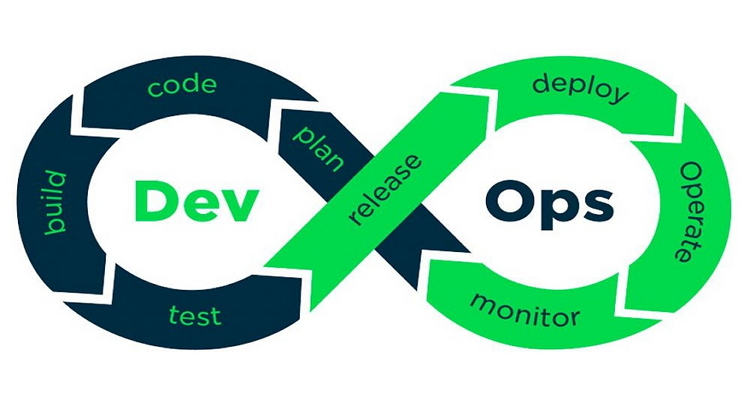
DevOps is no longer a buzzword — it is the operating standard for how modern software teams build, test, and ship products at speed. Organizations across India and globally are restructuring their engineering pipelines around DevOps practices, creating a sustained and growing demand for professionals who can work across the development-operations boundary with confidence.

The Vskills DevOps Certification Course is a comprehensive, video-based online program that equips you with hands-on proficiency in the tools and workflows that power real-world DevOps pipelines. From version control with Git and GitHub to container orchestration with Kubernetes, continuous integration with Jenkins, configuration management with Ansible, and observability with Prometheus and Grafana — the course covers the full DevOps toolchain in a structured, project-oriented format.

Why Choose This Certification

  • Government-Recognized Credential: Vskills certifications are conducted in association with ICSIL (Intelligent Communication Systems India Ltd.), a Government of India enterprise under the Ministry of Electronics and IT. This gives your DevOps certification an institutional credibility that private-sector certifications cannot match.
  • Lifetime Validity — No Renewal Fees: Unlike most industry certifications that expire every two to three years and require paid renewals, your Vskills DevOps certificate is valid for life from the date of issue. One investment, permanent credential.
  • Full-Stack DevOps Toolchain Coverage: The course covers every major layer of a professional DevOps pipeline — Git, Maven, Jenkins, Ansible, Docker, Kubernetes, SonarQube, Artifactory, Prometheus, and Grafana — giving you practical exposure to the exact stack that top employers look for.
  • Hands-On, Project-Oriented Learning: The curriculum is structured around real tasks — setting up CI/CD pipelines, deploying containerized applications, writing Ansible playbooks, configuring Kubernetes clusters, and integrating monitoring. You learn by doing, not just watching.
  • LinkedIn and Profile Tagging: Once certified, your credential is tagged directly on your LinkedIn profile and on Shine.com — two of the most actively searched platforms by Indian recruiters — so your certification works for you even when you are not actively job hunting.
  • Lifelong CV Visibility via Vskills Job Centre: Your resume is shared permanently with Vskills' recruiter network, giving you ongoing visibility with hiring companies without any additional effort.
  • Recognized by 4,000+ Recruiters: Vskills has built one of the largest recruiter networks in India. Certified candidates are visible to thousands of companies actively seeking DevOps talent — from large IT service firms to high-growth product startups.

Who Should Enroll?

This certification is designed for a wide range of learners at different stages of their technology career:

  • IT Professionals and System Administrators who want to transition into DevOps roles and need structured, tool-level training to bridge the gap between traditional infrastructure management and modern cloud-native operations.
  • Software Developers and Programmers who are already writing code but want to extend their skills to CI/CD pipelines, containerization, and automated deployments — making themselves more valuable in agile and DevOps-driven teams.
  • QA and Testing Professionals looking to understand how DevOps workflows integrate testing, quality gating (SonarQube), and automated deployment into the delivery pipeline.
  • Fresh Graduates and Engineering Students from computer science, IT, or electronics backgrounds who want to build job-ready DevOps skills and earn a government-recognized credential before entering the workforce.
  • Working Professionals Seeking Career Advancement who are already employed in IT companies and want to demonstrate DevOps competence to their employer, move into a DevOps engineer or platform engineering role, or improve their earning potential.
  • Technical Leads and Project Managers who need a working understanding of DevOps tools and processes to manage DevOps teams effectively, evaluate toolchain decisions, and communicate across development and operations functions.

No prior DevOps experience is required. A basic familiarity with software development or IT infrastructure concepts is sufficient to get started.

What You Will Learn?

The Vskills DevOps Certification Course covers the complete DevOps lifecycle — from source code management and build automation to container orchestration, configuration management, and production monitoring. Every module is built around practical, hands-on tasks so you graduate with real skills, not just theoretical knowledge.

Table of Contents

Module 1: Introduction to the Course

  • DevOps Introduction — what it is, why it matters, and the tools covered
  • Setting up your AWS account and cloud lab environment

Module 2: Git and GitHub

  • Version control fundamentals and why Git is the industry standard
  • Installing Git and setting up EC2 instances
  • Git workflow, staging, branching, merging, and resolving conflicts
  • Working with GitHub — repositories, cloning, pushing, pull requests
  • Advanced Git — rebase, fetch vs pull, protected branches, SSH authentication
  • Real-world DevOps workflow: dev branch → UAT → production release

Module 3: Maven

  • What Maven is and how it supports DevOps build automation
  • Maven project structure, goals, POM.xml, and dependency management
  • Building and deploying Java projects on Linux
  • Integrating Maven with Jenkins for CI pipelines
  • Deploying WAR files on Tomcat Server

Module 4: Artifactory

  • Setting up JFrog Artifactory as a binary repository manager
  • Integrating Artifactory with Jenkins for artifact storage and retrieval

Module 5: Jenkins

  • Creating and configuring Jenkins jobs with parameters
  • Running Maven builds and deploying applications via Jenkins
  • Jenkins Master-Slave configuration for distributed builds
  • GitHub webhooks, DSL jobs, and Jenkins Pipelines
  • Integrating Jenkins with Artifactory for end-to-end CI/CD

Module 6: SonarQube

  • Installing and configuring SonarQube for static code analysis
  • SonarQube with PostgreSQL database backend
  • Integrating SonarQube into Jenkins pipelines for automated quality gates

Module 7: Ansible

  • Ansible architecture, inventory management, and ansible.cfg
  • Writing Ansible Playbooks — tasks, conditions, and variables
  • Tomcat setup and application deployment using Ansible
  • Ansible Vault for secrets management and Ansible Roles for reusable automation
  • Configuring Jenkins using Ansible; using Ansible Galaxy

Module 8: Docker

  • Docker fundamentals — containers, images, and the Docker Hub
  • Docker commands, networks, and volumes
  • Writing Dockerfiles and building custom images
  • Docker Compose for multi-container applications and Docker Swarm for clustering

Module 9: Kubernetes

  • Kubernetes architecture and cluster setup (Minikube and Kubeadm)
  • Creating and managing a cluster on Google Cloud (GKE)
  • Kubernetes objects — Pods, Deployments, Services, Namespaces
  • Replication Controllers, ConfigMaps, and Helm Charts
  • Persistent Volumes (PV), Persistent Volume Claims (PVC), and dynamic provisioning
  • CI pipeline integration: deploying Java applications to Kubernetes
  • Horizontal Pod Autoscaler and memory management
  • Centralized logging with EFK (Elasticsearch, Fluentd, Kibana)

Module 10: Prometheus and Grafana

  • Setting up Prometheus for metrics collection and alerting
  • Configuring Grafana dashboards for real-time infrastructure and application monitoring

Exam and Certification Details

DetailInformation
Exam FormatOnline — attempt from anywhere, anytime
Number of Questions50 multiple-choice questions
Duration60 minutes
Passing Score25 out of 50 (50%) — no negative marking
Certificate ValidityLifetime — no renewal required
e-Learning AccessLifetime access to LMS and future content updates
ResultInstant — available immediately after exam completion
LanguageEnglish

Career Outcomes

Completing the Vskills DevOps Certification Course prepares you for some of the most in-demand and well-compensated roles in the Indian technology sector. DevOps engineers are no longer optional hires — they are central to how every technology team operates, making this certification a direct pathway to meaningful career growth.

Job Role Industry Avg. Salary (India) Experience Level
DevOps Engineer IT Services, Cloud, Startups ₹4 – ₹8 LPA Fresher – 2 years
Build and Release Engineer IT Services, Product, MNC ₹5 – ₹10 LPA 1 – 3 years
Cloud DevOps Engineer Cloud, E-commerce, Fintech ₹8 – ₹16 LPA 2 – 4 years
Kubernetes / Container Engineer SaaS, Enterprise, BFSI ₹10 – ₹18 LPA 3 – 5 years
Site Reliability Engineer (SRE) Product, Unicorn Startups, MNC ₹12 – ₹22 LPA 4 – 7 years
Platform Engineer / DevOps Architect Enterprise, Consulting, MNC ₹20 – ₹40 LPA 8+ years

Companies that hire DevOps Professionals

DevOps-certified professionals are among the most actively recruited talent in the Indian IT market. Organizations across IT services, cloud, fintech, e-commerce, and product development seek candidates with verified DevOps skills and recognized credentials.

Companies actively hiring DevOps professionals include: TCS, Infosys, Wipro, HCL Technologies, Cognizant, Accenture, Tech Mahindra, Capgemini, IBM India, LTIMindtree, Mphasis, L&T Technology Services, Amazon (AWS), Google India, Microsoft India, Oracle India, Flipkart, Paytm, Razorpay, PhonePe, Swiggy, Zomato, Freshworks, Zoho, Adobe India, Persistent Systems, Hexaware, Coforge, KPIT Technologies, and hundreds of mid-size product and SaaS companies running agile delivery pipelines.

DevOps Sample Questions

https://www.vskills.in/certification/devOps-sample-questions

DevOps Practice Test

https://www.vskills.in/practice/devops-practice-questions

DevOps Interview Questions

https://www.vskills.in/interview-questions/top-devops-interview-questions-vskills

DevOps Related Blogs

Checkout the latest online blogs on DevOps.
DevOps Certification Course – Frequently Asked Questions

Get answers about eligibility, exam pattern, career scope, validity, jobs and enrolment for Vskills DevOps Certification Course.

The Vskills DevOps Certification Course is a government-recognized, video-based online program that trains you in the complete DevOps toolchain — covering Git, Jenkins, Maven, Ansible, Docker, Kubernetes, SonarQube, Prometheus, and Grafana. The course is designed to give you hands-on, practical proficiency in building and managing real-world CI/CD pipelines, and culminates in a lifetime-valid certification recognized by 4,000+ recruiters across India.
The Vskills DevOps certificate is valid for life from the date of issue. There are no renewal fees, no re-examination requirements, and no expiry dates. This makes it a one-time investment with permanent professional value — unlike most vendor certifications that require renewal every two to three years.
There are no strict eligibility requirements. The course is open to IT professionals, software developers, system administrators, QA engineers, fresh graduates, and working professionals from any background. A basic familiarity with software development concepts or IT infrastructure is helpful but not mandatory. The course is structured to take you from foundational concepts to advanced tooling in a step-by-step manner.
The course covers the full DevOps toolchain used in professional environments: Git and GitHub for version control, Maven for build automation, Jenkins for continuous integration and delivery, JFrog Artifactory for artifact management, SonarQube for code quality analysis, Ansible for configuration management and provisioning, Docker for containerization, Kubernetes for container orchestration, and Prometheus with Grafana for monitoring and observability. AWS and Google Cloud Platform are also used for lab environments throughout the course.
Yes, the course is exclusively available online in video format. All learning material is delivered through on-demand video lessons that you can access at your own pace, from any device, at any time. There is no hard copy study material for this certification. The online exam is also conducted digitally, so the entire process from enrollment to certification can be completed remotely.
The Vskills DevOps certification exam is conducted online. It is a multiple-choice question-based test that you can appear for from the comfort of your home or office. Once you enroll, you have up to one year to complete the exam. There is no minimum or maximum study duration — you can prepare at your own pace and appear when ready.
Candidates need to score a minimum of 50% in the Vskills DevOps certification exam to pass and receive the certificate. The exam tests your conceptual understanding as well as practical knowledge of DevOps tools, workflows, and processes covered in the course curriculum.
Yes. Once you earn the Vskills DevOps certification, your credential is tagged directly on your LinkedIn profile. This tagging ensures your certification is visible to prospective employers even when you are not actively applying for jobs, giving your profile a passive but continuous advantage in the job market.
The Vskills Job Centre is a lifelong CV-sharing service available to all certified candidates. Once you earn your DevOps certification, your resume is shared with Vskills' network of 4,000+ empanelled recruiters and hiring companies on an ongoing basis — with no time limit and no additional cost. This means you remain visible to potential employers throughout your career, regardless of whether you are actively seeking a new role at any given time.
The Vskills DevOps Certification prepares you for a range of high-demand roles including DevOps Engineer, Cloud DevOps Engineer, Build and Release Engineer, Kubernetes and Container Engineer, Site Reliability Engineer (SRE), Automation Engineer, Platform Engineer, and DevOps Consultant. These roles are available across IT services companies, product firms, fintech organizations, e-commerce platforms, and cloud-native startups, with salaries ranging from ₹4 LPA at the entry level to ₹40 LPA and above for senior and architect-level positions.
Vskills certified DevOps professionals are hired by a wide range of companies across India and globally. These include major IT service firms such as TCS, Infosys, Wipro, HCL Technologies, Cognizant, Accenture, Tech Mahindra, and Capgemini; technology giants like IBM, Amazon, Google, Microsoft, and Oracle; and high-growth product and internet companies such as Flipkart, Paytm, Razorpay, PhonePe, Swiggy, Zomato, Freshworks, and Zoho, among hundreds of mid-size and enterprise organizations.
Yes. Vskills offers an exam retake option for candidates who do not clear the certification exam on their first attempt. You can register for a retake through the Vskills website. It is recommended that you review the areas where you scored low, practice using the Vskills DevOps mock tests and practice questions available on the platform, and then appear for the retake once you feel confident.
Yes. Vskills provides free DevOps practice tests and mock questions on its platform at vskills.in/practice. These practice tests are designed to simulate the actual exam pattern and help you assess your preparation level before appearing for the certification exam. Regularly attempting these tests is one of the most effective ways to identify knowledge gaps and build exam confidence.
Enrolling is straightforward. Visit the Vskills DevOps Certification Course page at vskills.in, click on the Buy Now button, and complete the payment online using a Visa, Mastercard, Amex card, or any Indian bank debit card. No application form is required for online payments. Once payment is confirmed, you will receive access to the video course material and your exam enrollment will be activated, giving you up to one year to appear for the certification exam.

Trusted Reviews for Vskills DevOps Certification Course

Hands-on training in Git, Jenkins, Docker, Kubernetes, Ansible, SonarQube, Prometheus and Grafana — with a government-recognized, lifetime-valid certification.

4.8
★★★★★

Based on 22k+ verified learners

★★★★★

The Jenkins and Kubernetes modules are very hands-on. I went from knowing almost nothing about CI/CD to setting up full pipelines on my own. Highly recommend.

- Karan Malhotra, DevOps Engineer at TCS
★★★★★

I was a system admin looking to move into cloud and DevOps. This course gave me exactly the toolchain knowledge I needed — Docker, Ansible, and the GCP Kubernetes, everything. Worth the investment!

- Sneha Iyer, Cloud Engineer at Infosys
★★★★

Good structured course covering all major DevOps tools in one place. The registration process was quite smooth. This is my 2nd course with Vskills, Thanks a lot for everything. 

- Rahul Verma, Software Developer at Wipro
★★★★★

As a fresh graduate, I was not sure where to start with DevOps. This course laid everything out clearly from Git basics all the way to Kubernetes and Prometheus. Great value.

- Divya Sharma, Jr. Engineer at HCL

TABLE OF CONTENT


Module 1: Introduction to the Course

  • DevOps Introduction 
  • Setting up your AWS account

Module 2: Git and GitHub

  • Version control fundamentals
  • Installing Git and setting up EC2 instances
  • Git workflow, staging, branching, merging, and resolving conflicts
  • Working with GitHub — repositories, cloning, pushing, pull requests
  • Advanced Git — rebase, fetch vs pull, protected branches, SSH authentication
  • Real-world DevOps workflow: dev branch → UAT → production release

Module 3: Maven

  • What Maven is and how it supports DevOps build automation
  • Maven project structure, goals, POM.xml, and dependency management
  • Building and deploying Java projects on Linux
  • Integrating Maven with Jenkins for CI pipelines
  • Deploying WAR files on Tomcat Server

Module 4: Artifactory

  • Setting up JFrog Artifactory as a binary repository manager
  • Integrating Artifactory with Jenkins for artifact storage and retrieval

Module 5: Jenkins

  • Creating and configuring Jenkins jobs with parameters
  • Running Maven builds and deploying applications via Jenkins
  • Jenkins Master-Slave configuration for distributed builds
  • GitHub webhooks, DSL jobs, and Jenkins Pipelines
  • Integrating Jenkins with Artifactory for end-to-end CI/CD

Module 6: SonarQube

  • Installing and configuring SonarQube for static code analysis
  • SonarQube with PostgreSQL database backend
  • Integrating SonarQube into Jenkins pipelines for automated quality gates

Module 7: Ansible

  • Ansible architecture, inventory management, and ansible.cfg
  • Writing Ansible Playbooks — tasks, conditions, and variables
  • Tomcat setup and application deployment using Ansible
  • Ansible Vault for secrets management and Ansible Roles for reusable automation
  • Configuring Jenkins using Ansible; using Ansible Galaxy

Module 8: Docker

  • Docker fundamentals — containers, images, and the Docker Hub
  • Docker commands, networks, and volumes
  • Writing Dockerfiles and building custom images
  • Docker Compose for multi-container applications and Docker Swarm for clustering

Module 9: Kubernetes

  • Kubernetes architecture and cluster setup (Minikube and Kubeadm)
  • Creating and managing a cluster on Google Cloud (GKE)
  • Kubernetes objects — Pods, Deployments, Services, Namespaces
  • Replication Controllers, ConfigMaps, and Helm Charts
  • Persistent Volumes (PV), Persistent Volume Claims (PVC), and dynamic provisioning
  • CI pipeline integration: deploying Java applications to Kubernetes
  • Horizontal Pod Autoscaler and memory management
  • Centralized logging with EFK (Elasticsearch, Fluentd, Kibana)

Module 10: Prometheus and Grafana
  • Setting up Prometheus
  • Configuring Grafana

Write a review

Please login or register to review

 For Support