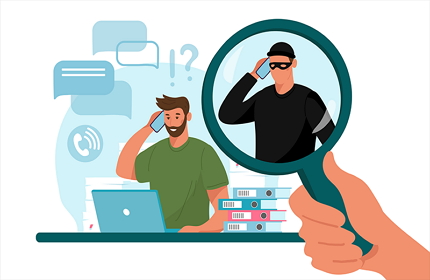
Fraud prevention is the practice of identifying, assessing, and mitigating the risk of fraudulent activity before it results in financial or reputational damage to an organization. It spans a wide range of disciplines — understanding why fraud occurs, recognizing red flags, designing internal controls, and using data analytics to detect irregularities early. As digital transactions, remote onboarding, and third-party vendor relationships continue to expand, so do the opportunities for fraud, making fraud prevention a growing priority for organizations across banking, insurance, fintech, and corporate finance.
The Vskills Fraud Prevention Certification is designed to build practical, job-ready expertise across the full fraud management lifecycle — from understanding fraud psychology and common schemes, to fraud risk assessment, internal controls, detection techniques, data analytics, investigation, regulatory compliance, and emerging technologies like AI and blockchain in fraud prevention. The certification validates a candidate's ability to not just recognize fraud risk, but to actively prevent, detect, and respond to it in a real organizational setting.
Why Choose Vskills Certified Fraud Prevention Professional Certification
The Vskills Certified Fraud Prevention Professional course stands out for covering the complete fraud prevention discipline — not just detection after the fact, but the psychology, risk assessment, controls, and prevention strategy needed to stop fraud before it happens.
Govt. Certified credential — This is a Govt. Certified course, adding recognized credibility to your fraud risk and compliance profile.
Genuine focus on prevention, not just detection — A dedicated module on prevention strategies (culture, policy design, screening, whistleblower programs, segregation of duties) alongside detection and investigation content most competing courses lead with instead.
Deep fraud risk assessment coverage — Covers fraud risk identification, analysis, measurement and scoring, risk appetite, and building an organization-wide fraud risk assessment framework.
Practical data analytics skills — Includes Benford's Law, Z-score analysis, correlation and pattern analysis, and building fraud detection dashboards, alongside a dedicated MS Excel for Fraud Analytics module covering PivotTables, formulas, and conditional formatting for red-flag identification.
Current regulatory and technology coverage — Covers SOX, RBI fraud reporting norms, PMLA, and Forensic Accounting and Investigation Standards (FAIS), alongside AI/ML in fraud prevention, RPA, and blockchain/cryptocurrency forensics.
Flexible, self-paced e-learning — Study at your own pace with access to structured course material.
Lifetime validity of certification — No renewal required once certified.
Who Should Enroll
This course is designed for professionals and students who want to build or strengthen their expertise in fraud prevention, risk management, and internal controls.
Risk and Compliance Professionals — seeking structured knowledge of fraud risk assessment and prevention strategy design.
Internal Auditors — looking to strengthen their understanding of internal controls, red flags, and fraud risk evaluation.
Finance and Accounts Professionals — wanting to recognize accounting anomalies and financial statement fraud risk in their day-to-day work.
HR Professionals — responsible for employee screening, background verification, and whistleblower program design.
Fraud and Forensic Professionals — wanting to formalize their expertise in fraud psychology, investigation, and evidence handling.
Data Analysts and Finance Professionals — seeking practical fraud analytics skills using Excel-based tools and techniques.
Company Secretaries and Governance Professionals — working on internal control design and regulatory compliance (SOX, RBI, PMLA).
Students and Early-Career Professionals — seeking a credential that validates job-ready knowledge for entry into fraud prevention, risk, or compliance roles.
Existing Employees Seeking Career Growth — looking to formally validate their fraud prevention knowledge to strengthen their case for a senior risk or compliance role.
What You Will Learn
The course takes learners through the complete fraud prevention discipline — from understanding fraud and fraudster psychology through risk assessment, prevention strategy, internal controls, detection and investigation, and regulatory compliance.
Fraud fundamentals — definitions, legal elements, the cost and impact of fraud, and occupational fraud classification
The psychology of fraud — the Fraud Triangle and Fraud Diamond, pressure, opportunity, rationalization, and fraudster profiling
Types and schemes of fraud, including asset misappropriation, corruption and bribery, financial statement fraud, and cyber-enabled fraud
Fraud risk assessment — risk identification, analysis, measurement and scoring, and building an organization-wide fraud risk framework
Red flags and warning indicators, from behavioral and financial red flags to escalation pathways for investigation
Fraud prevention strategies — culture building, policy design, employee screening, whistleblower programs, and eliminating opportunities for fraud
Internal controls and the COSO framework, including control design, documentation, and testing for effectiveness
Fraud detection techniques and analytical review methods, including industry-specific detection approaches
Data analytics for fraud detection — Benford's Law, Z-score analysis, correlation analysis, and building fraud detection dashboards
Fraud monitoring and investigation — evidence gathering, interviewing techniques, case documentation, and post-investigation remediation
Legal and regulatory compliance — SOX, RBI fraud reporting norms, PMLA, FAIS, and cross-border compliance considerations
Technology and the future of fraud prevention — AI/ML, RPA, blockchain and cryptocurrency forensics, and cybersecurity fundamentals
Hands-on MS Excel for fraud analytics — PivotTables, formulas, lookup functions, conditional formatting, and building visual fraud reports
Career Outcomes
Completing the Vskills Certified Fraud Prevention Professional course opens up roles across banking, consulting, insurance, and corporate risk functions, with a clear progression path from fraud prevention analyst roles through to senior fraud risk and compliance leadership.
Job Role
Industry
Avg. Salary (India)
Experience Level
Fraud Prevention Analyst
Banking, Insurance, Corporate
₹4 – ₹7 LPA
Fresher – 2 years
Internal Auditor (Fraud Focus)
BFSI, Manufacturing, Corporate
₹6 – ₹10 LPA
2 – 4 years
Fraud Risk & Controls Specialist
Banking, Consulting, Insurance
₹8 – ₹13 LPA
3 – 6 years
Fraud Prevention Consultant
Consulting, BFSI, Corporate
₹10 – ₹16 LPA
5 – 8 years
Fraud Risk Manager
Banking, Insurance, Large Corporates
₹15 – ₹22 LPA
9 – 13 years
Head of Fraud Risk / Chief Risk Officer
Banking, MNC, Large Enterprises
₹30 – ₹45+ LPA
15+ years
Companies That Hire
Banks, insurance companies, consulting firms, and corporate risk and internal audit functions actively hire fraud prevention professionals to design controls, assess fraud risk, and build organization-wide prevention programs. Organizations such as HDFC Bank, ICICI Bank, Axis Bank, Deloitte, EY, KPMG, PwC, Genpact, Bajaj Allianz, ICICI Lombard, and Reliance Industries, along with Global Capability Centres (GCCs) of international banks and insurers, regularly hire for roles spanning fraud prevention, internal controls, fraud risk management, and compliance leadership.
Vskills Certified Fraud Prevention Professional – Frequently Asked Questions
Get answers about eligibility, exam pattern, career scope, validity, jobs and enrolment for the Vskills Certified Fraud Prevention Professional Certification.
A fraud prevention specialist designs and implements controls, policies, and awareness programs to stop fraud before it happens, alongside conducting regular fraud risk assessments to identify vulnerabilities. Employers typically look for strong analytical thinking, attention to detail, knowledge of relevant regulations (like AML requirements), and increasingly, the ability to clearly communicate findings and recommendations to non-technical stakeholders and senior management.
Interviews commonly include questions about your approach to managing fraud risk across an organization, how you'd build fraud awareness among employees who aren't fraud specialists themselves, and behavioral questions asking you to walk through a specific case where you identified or investigated suspicious activity. Employers are generally testing both technical knowledge and practical judgment — how you'd actually prioritize and act in an ambiguous, real-world situation, not just textbook definitions.
Fraud detection focuses on identifying fraud that is already happening or has already occurred, often through monitoring and analytics. Fraud prevention is proactive — designing internal controls, screening processes, organizational culture, and policies specifically intended to stop fraud opportunities from existing in the first place. Most real fraud programs combine both, but prevention is generally considered the more cost-effective, upstream layer of defense.
A structured fraud risk assessment helps an organization identify its specific vulnerabilities — which processes, roles, or transactions carry the highest fraud risk — before losses occur, rather than reacting after the fact. Candidates who can demonstrate a genuine, systematic approach to risk identification and scoring are typically seen as more valuable than those who can only describe fraud schemes after they've already happened.
Not necessarily — while a criminal justice or forensic accounting background is a common path, many fraud prevention professionals move in from internal audit, compliance, risk management, or general finance and analytics roles. Employers often value practical judgment, analytical rigor, and integrity as much as, or more than, a specific formal academic background in fraud alone.
It is a Govt. Certified course covering the complete fraud prevention discipline — fraud psychology, fraud risk assessment, prevention strategy, internal controls (COSO), detection techniques, data analytics for fraud detection, investigation practice, regulatory compliance (SOX, RBI, PMLA, FAIS), and hands-on MS Excel fraud analytics.
There are no strict eligibility criteria. The course is suitable for risk and compliance professionals, internal auditors, finance and accounts professionals, HR professionals, fraud and forensic professionals, data analysts, and students or early-career professionals.
The exam is an online proctored test consisting of 50 multiple-choice questions to be completed in 60 minutes. A minimum of 50% marks is required to pass and earn the certification.
Yes, this is a Govt. Certified course, and the certification carries lifetime validity, meaning there is no need for renewal once you are certified.
If a candidate does not clear the exam on the first attempt, a retake can be availed by registering for the exam retake voucher, priced at approximately ₹799 + GST, at vskills.in/certification/exam-retake. Upon successfully passing, the certificate is issued and made available for download, and can be shared on professional profiles such as LinkedIn or included in resumes to showcase verified fraud prevention competency.
Trusted Reviews for Vskills Certified Fraud Prevention Professional
Build expertise in fraud risk assessment, prevention strategy, and internal controls with a govt certified lifetime credential.
4.9
★★★★★
Based on verified learners
★★★★★
Honestly wasn't expecting much depth from an online course, but all the modules were sharper and more practical than I anticipated. Genuinely changed my prespective of online courses.
- Vivek Ahluwalia, Internal Audit Manager
★★★★★
I had 7 years of experience in AML Compliance, just looking to enhance my skills and get a recognition for same. It's Govt. certificate, but truely upto the mark. Kudos!
- Preeti Bhandari, Compliance Officer
★★★★★
I came from a Technical background and my friend suggest me this course to start a career in the Risk and Compliance domain. I was able to learn and switch my profile. Thanks Vskills
- Aakash Bose, HR Business Partner
★★★★★
Recommended this to two colleagues already. Good balance of theory and the Excel-based analytics work — that combination is hard to find in one place.