Customer Due Diligence (CDD) is the foundational process financial institutions and regulated entities use to verify a customer's identity, understand the nature of their business relationship, and assess the money laundering and terrorist financing risk they may pose - forming the backbone of every effective AML/KYC compliance program. As global regulators tighten enforcement and cross-border financial crime grows more sophisticated, organizations increasingly need professionals who understand not just the basics of identity verification, but the full risk-based approach to CDD - including beneficial ownership identification, enhanced due diligence for higher-risk customers, and the specific regulatory obligations under frameworks like the PMLA, FATF Recommendations, and India's Significant Beneficial Owner (SBO) requirements.
The Vskills Certified Customer Due Diligence (CDD) Professional course is a Govt. Certified program that builds comprehensive, current CDD expertise - covering the foundations of AML, KYC and CDD, the regulatory and legal framework, the risk-based approach, customer identification and verification, standard/simplified/enhanced due diligence, beneficial ownership, screening and ongoing monitoring, specialized CDD requirements, documentation and record-keeping, and governance and practical application - equipping learners to perform genuinely effective, regulation-aligned customer due diligence in real-world compliance roles.
Why Choose Vskills Customer Due Diligence (CDD) Certification
The Vskills Certified CDD Professional course stands out for covering the complete, current CDD discipline — not just basic identity verification, but the full risk-based approach, beneficial ownership, and specialized due diligence obligations compliance professionals are expected to apply today.
- Govt. Certified credential — This is a Govt. Certified course, adding recognized credibility to your AML, KYC, and CDD compliance profile.
- Comprehensive, 10-module curriculum — Spanning AML/KYC/CDD foundations, regulatory framework, risk-based approach, identification and verification, standard/simplified/enhanced due diligence, beneficial ownership, screening and monitoring, and governance.
- Genuine risk-based approach depth — A dedicated module on customer risk categorization, risk scoring models, and non-face-to-face/digital onboarding risk — content many generic KYC courses treat only briefly.
- Strong beneficial ownership coverage — Covers the FATF standard, the cascading test for legal persons, shell company structures, and India's Significant Beneficial Owner (SBO) declaration requirements in genuine depth.
- Full SDD/EDD distinction — Clearly separates Simplified and Enhanced Due Diligence, including specific triggering factors and step-by-step EDD conduct for higher-risk customer profiles.
- Current regulatory grounding — Covers PMLA, RBI AML/KYC guidelines, FATF Recommendations (including Recommendation 16 on wire transfers and Recommendation 11 on record-keeping), and FATCA/CRS reporting requirements.
- Practical, applied learning — Closes with real case scenarios and applied exercises, not just theoretical definitions.
- Flexible, self-paced e-learning — Study at your own pace with access to structured course material.
- Lifetime validity of certification — No renewal required once certified.
Who Should Enroll
This course is designed for professionals and students who want to build or strengthen their expertise in customer due diligence, AML, and KYC compliance.
- KYC and CDD Analysts — looking to formalize and deepen their practical due diligence expertise.
- AML and Financial Crime Compliance Professionals — wanting structured knowledge of the risk-based approach and regulatory obligations.
- Onboarding and Account Opening Teams — responsible for customer identification, verification, and CAP/CIP implementation.
- Risk and Compliance Officers — seeking to strengthen fraud and money laundering risk assessment capabilities.
- Banking and Financial Services Employees — working in correspondent banking, trade finance, or wire transfer functions requiring specialized CDD knowledge.
- Company Secretaries and Legal Professionals — working on beneficial ownership declarations and corporate compliance requirements.
- Internal Auditors — looking to strengthen their understanding of CDD governance, documentation, and record-keeping standards.
- Students and Early-Career Professionals — seeking a credential that validates job-ready knowledge for entry into AML, KYC, or compliance roles.
- Existing Employees Seeking Career Growth — looking to formally validate their CDD knowledge to strengthen their case for a senior compliance or risk role.
What You Will Learn
The course takes learners through the complete customer due diligence discipline — from AML/KYC/CDD foundations through the regulatory framework, risk-based approach, identification and verification, standard/simplified/enhanced due diligence, beneficial ownership, monitoring, and governance.
- Foundations of AML, KYC and CDD — money laundering stages, common methods, terrorist financing, and the distinctions between AML, KYC, and CDD
- Regulatory and legal framework — PMLA, RBI AML/KYC guidelines, FATF Recommendations, FATCA/CRS reporting, and the regulatory treatment of Politically Exposed Persons
- The risk-based approach — customer vs. institutional risk, risk categorization, risk scoring models, and digital/non-face-to-face onboarding risk
- Customer identification and verification — CAP, CIP, verifying individual and corporate customers, and eKYC/digital identity verification
- Customer Due Diligence — standard requirements, step-by-step CDD performance, and CDD segmentation
- Simplified Due Diligence (SDD) — conditions for applying SDD and low-risk customer categories
- Enhanced Due Diligence (EDD) — triggering factors, EDD measures, and conducting EDD for higher-risk profiles
- Beneficial ownership — identifying beneficial owners, the FATF standard, the cascading test, shell companies, and India's SBO declaration requirements
- Screening and ongoing monitoring — name and sanctions screening, adverse media screening, and monitoring changing customer profiles
- Specialized CDD requirements — correspondent banking, wire transfer requirements (FATF Recommendation 16), third-party reliance, and trade-based money laundering
- CDD documentation and record-keeping — building risk-based customer profiles and FATF Recommendation 11 record-keeping requirements
- Governance and practical application — the CDD/KYC governance model, the role of the Board and compliance function, and applied case scenarios
Exam and Certification Details
| Detail |
Information |
| Exam Format |
Online — attempt from anywhere, anytime |
| Number of Questions |
50 multiple-choice questions |
| Duration |
60 minutes |
| Passing Score |
25 out of 50 (50%) — no negative marking |
| Certificate Validity |
Lifetime — no renewal required |
| e-Learning Access |
Lifetime access to LMS and future content updates |
| Result |
Instant — available immediately after exam completion |
| Language |
English |
How to Use Your Vskills Certificate
-
✓
Add it to LinkedIn under "Licenses & Certifications" so recruiters searching for AML/KYC talent find your profile.
-
✓
Feature it on your resume — the government-recognised credential line adds instant credibility to your compliance experience.
-
✓
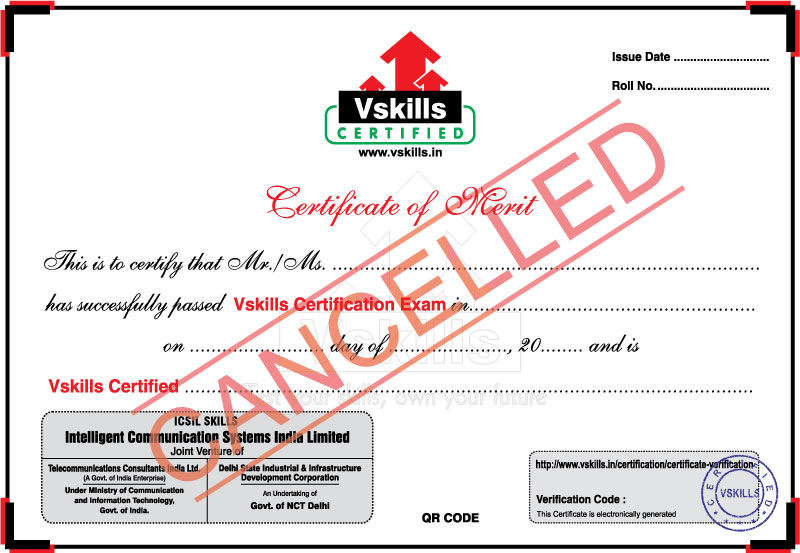
Share the verification link with employers — your certificate comes with a QR code and verification code recruiters can check instantly.
-
✓
Use it for internal promotions — many banks and NBFCs accept this certification as proof of mandatory AML/KYC training.
Companies that Hire Vskills Certified Professionals
Banks, fintech companies, NBFCs, and financial services firms actively hire CDD-certified professionals to manage customer onboarding, risk assessment, and AML compliance obligations. Organizations such as HDFC Bank, ICICI Bank, Axis Bank, Kotak Mahindra Bank, Paytm, Razorpay, Deloitte, EY, KPMG, and PwC, along with Global Capability Centres (GCCs) of international banks and financial institutions, regularly hire for roles spanning KYC/CDD analysis, AML compliance, beneficial ownership review, and compliance leadership.

Career Outcomes for Certified Professionals
Completing the Vskills Certified Customer Due Diligence (CDD) Professional course opens up roles across banking, fintech, and financial services compliance, with a clear progression path from CDD/KYC analyst roles through to senior AML and compliance leadership.
| Job Role |
Industry |
Avg. Salary (India) |
Experience Level |
| KYC/CDD Analyst |
Banking, Fintech, BPO |
₹4 – ₹7 LPA |
Fresher – 2 years |
| AML/CDD Compliance Executive |
Banking, Financial Services |
₹6 – ₹10 LPA |
2 – 4 years |
| Beneficial Ownership / EDD Specialist |
Banking, Consulting, BFSI |
₹8 – ₹13 LPA |
3 – 6 years |
| CDD/KYC Team Lead |
Banking, Fintech, GCCs |
₹11 – ₹16 LPA |
6 – 9 years |
| AML Compliance Manager |
Banking, Financial Services, Consulting |
₹16 – ₹24 LPA |
10 – 14 years |
| Head of AML/KYC Compliance |
Banking, MNC, Large Financial Institutions |
₹28 – ₹40+ LPA |
15+ years |
Customer Due Diligence (CDD) Table of Contents
https://www.vskills.in/certification/customer-due-diligence-cdd-table-of-contents
Customer Due Diligence (CDD) Practice Questions
https://www.vskills.in/practice/customer-due-diligence-cdd
Customer Due Diligence (CDD) Interview Questions
https://www.vskills.in/interview-questions/customer-due-diligence-cdd-interview-questions
Domain Expert Interview Series
TABLE OF CONTENT
Module 1: Foundations of AML, KYC and CDD
- What is Money Laundering?
- Stages of Money Laundering (Placement, Layering, Integration)
- Common Money Laundering Methods
- Money Laundering – Case Studies
- What is Terrorist Financing?
- Know Your Customer (KYC) Basics
- What is Customer Due Diligence (CDD)?
- Difference between AML, KYC and CDD
- CDD vs. Ongoing Monitoring
Module 2: Regulatory and Legal Framework
- Prevention of Money Laundering Act, 2002 (PMLA)
- RBI Guidelines on AML/KYC
- FATF Recommendations — Overview
- AML-KYC International Legislation and Cooperation
- Reporting Requirements under FATCA and CRS
- Politically Exposed Persons (PEPs) — Regulatory Treatment
Module 3: The Risk-Based Approach
- What is Risk in a CDD Context?
- Customer Risk vs. Institutional Risk
- Risk-Based Approach — Core Principles
- Customer Risk Categorization (Low/Medium/High)
- Risk Scoring Models
- Customer Risk Rating — Best Practices
- Money Laundering Risk Factors
- Non-Face-to-Face Onboarding and Digital Risk
Module 4: Customer Identification and Verification
- Who is a Customer?
- Customer Acceptance Policy (CAP)
- Customer Identification Procedure (CIP)
- Customer Identification Requirements — Guidelines
- Verifying Individual Customers
- Verifying Corporate and Institutional Customers
- eKYC and Digital Identity Verification
- Purpose and Nature of the Business Relationship
Module 5: Customer Due Diligence — Standard, Simplified and Enhanced
- CDD Core Requirements
- CDD Regulatory Obligations
- Performing Customer Due Diligence — Step by Step
- CDD Segmentation
- What is Simplified Due Diligence (SDD)?
- Conditions for Applying SDD
- Low-Risk Customer Categories
- SDD vs. Standard CDD
- EDD Basics and the Need for EDD
- Factors Triggering EDD
- Enhanced Due Diligence Measures
- Conducting EDD — Step by Step
- Higher-Risk Profile Customers
Module 6: Beneficial Ownership
- Who is a Beneficial Owner (BO)?
- Why Identifying the BO Matters
- Legal Persons vs. Legal Arrangements
- International UBO Standards and Initiatives
- The FATF Standard for Beneficial Ownership
- The Cascading Test for Legal Persons
- Using Thresholds to Identify BOs
- India — Declaration of Significant Beneficial Owner (SBO)
- Shell Companies and Complex Ownership Structures
- New-Age BO Identification Procedures
Module 7: Screening and Ongoing Monitoring
- Customer Screening — Basics
- Name Screening
- Sanctions Screening
- Negative / Adverse Media Screening
- Screening Related Parties
- Ongoing CDD Monitoring
- Monitoring Changing Customer Profiles and Suspicious Transactions
Module 8: Specialized CDD Requirements
- Correspondent Banking Due Diligence
- Wire Transfer / Fund Transfer Requirements (FATF Recommendation 16)
- Third-Party Reliance in CDD
- CDD for Trusts and Legal Arrangements
- Trade-Based Money Laundering and CDD Considerations
Module 9: CDD Profiles, Documentation and Record-Keeping
- Customer CDD Profile — Basics
- Building and Maintaining Risk-Based Customer Profiles
- Information to be Preserved
- Securing Customer Information
- CDD Record-Keeping Requirements
- FATF Recommendation 11 — Record-Keeping
- Which CDD Records to Keep
- CDD and Customer Identification Records
Module 10: Governance, Compliance and Practical Application
- CDD/KYC Governance Model
- Role of the Board and Senior Management
- Role of the Compliance Function in AML/CDD/KYC
- Building a CDD Culture within an Organization
- Practical Case Scenarios and Applied Exercises

.png "e-leanring")

 ►
►
 ►
►
 ►
►
 ►
►
 ►
►
 ►
►
 ►
►
 ►
►