Become a certified AML KYC Compliance Officer with Vskills, India's leading certification body. Financial crime is no longer a back-office concern - it is a board-level priority. With the Reserve Bank of India (RBI) tightening its KYC Master Directions and FATF placing increasing scrutiny on Indian financial institutions, banks and NBFCs across the country are under pressure to ensure every compliance professional on their team is certified, current, and credible.
Vskills Certified AML-KYC Compliance Officer programme is India's most accessible government-recognised credential in Anti-Money Laundering (AML) and Know Your Customer (KYC). This certification is accepted by public sector banks, private banks, NBFCs, MNCs, fintech companies, and Fortune 500 firms as proof of verified AML/KYC expertise.
Whether you are a graduate wanting to start a career in AML, or a finance professional looking to transition into the compliance domain - this certification gives you the knowledge, the credential, and the career edge you need.
Why Choose Vskills AML KYC Certification?
India's compliance landscape is evolving faster than ever. The Prevention of Money Laundering Act (PMLA) 2002, RBI's amended KYC guidelines, and India's commitments to FATF have collectively raised the bar for what financial institutions expect from their compliance teams.
Here is why this certification matters for your career:
- RBI compliance requirement: RBI guidelines mandate that all bank staff involved in KYC and AML functions are adequately trained. This certification fulfils that requirement with a government-recognised credential.
- Recognised by employers worldwide: Vskills certifications are listed on India's largest job portals — with dedicated job tagging that increases your visibility to recruiters at leading banks and financial institutions.
- No renewal fees, ever: Unlike other certifications that require expensive periodic renewal, your Vskills certificate is valid for life. Earn it once; benefit forever.
- Covers India & Global Specific Regulations: The curriculum is specifically built around RBI guidelines, PMLA 2002, UK and US Regulatory Frameworks, FATF commitments.
- Flexible, self-paced online learning: Access 30+ hours of structured e-learning on any device, at any time. The online exam can be attempted from your home or office — no exam centre, no fixed date.
- Affordable without compromising credibility: This certification delivers government-backed credibility that is directly relevant to the job market and also pocket friendly.
Who Should Enroll?
This certification is designed for college graduates and professionals working in or transitioning into the AML compliance function within the banking and financial services sector. You are the right candidate if you are:
- Compliance officer, risk manager, or internal auditor at a bank, NBFC, Consulting Firm, or financial institution
- Branch manager, relationship manager, or operations staff responsible for account opening and KYC verification
- A transaction monitoring analyst or financial crime investigator
- Finance graduate or MBA student preparing to enter the AML/KYC compliance domain
- Chartered Accountant, Company Secretary, or legal professional advising financial institutions on regulatory compliance
- Fintech or payment gateway professional navigating RBI's digital KYC and AML regulations
- HR professional or L&D manager assessing or upskilling your organisation's compliance team
What You Will Learn?
The certification covers global AML frameworks, Indian regulatory requirements, customer due diligence, transaction monitoring, risk assessment, reporting obligations, and internal compliance controls, making it ideal for banking, financial services, fintech, NBFC, and compliance professionals.
Key Learning Outcomes
- Gain a comprehensive understanding of money laundering concepts, stages, methods, typologies, and real-world case studies.
- Learn the provisions of the Prevention of Money Laundering Act (PMLA), 2002 and its significance in combating financial crimes.
- Understand the global AML ecosystem, including FATF recommendations, Basel Committee guidelines, EU Directives, UN resolutions, Wolfsberg Principles, and other international regulatory frameworks.
- Explore AML regulations in India, including RBI guidelines, regulatory expectations, and compliance best practices.
- Understand the role of technology in AML compliance, transaction monitoring, and financial crime prevention.
- Learn the complete money laundering lifecycle, including placement, layering, integration, and emerging laundering techniques.
- Identify suspicious activities, unusual transactions, terrorist financing indicators, and informal value transfer systems.
- Understand the responsibilities of correspondent banking and wire transfers in maintaining AML compliance.
- Master Know Your Customer (KYC) principles, customer onboarding processes, customer profiling, and account opening requirements.
- Learn customer identification procedures (CIP), customer acceptance policies (CAP), and customer due diligence (CDD) requirements.
- Develop expertise in customer risk categorization and risk-based approaches using risk scoring models.
- Understand enhanced due diligence requirements for high-risk customers, politically exposed persons (PEPs), and non-face-to-face customers.
- Learn operational KYC guidelines covering account monitoring, safeguards, account closure, and periodic review processes.
- Understand AML governance, including the roles and responsibilities of directors, senior management, principal officers, business units, and internal audit teams.
- Learn the reporting requirements for Cash Transaction Reports (CTR), Suspicious Transaction Reports (STR), Counterfeit Currency Reports (CCR), and Non-Profit Organization Transaction Reports (NTRs).
- Gain practical knowledge of transaction monitoring methodologies, alert generation, suspicious transaction detection, and name screening processes.
- Understand the importance of employee training, customer awareness programs, and maintaining AML compliance culture within organizations.
- Learn KYC updation requirements, periodic review processes, and regulatory expectations for maintaining accurate customer information.
- Build practical knowledge required for AML/KYC roles in banks, NBFCs, fintech companies, payment institutions, insurance companies, and financial services organizations.
- Develop the skills needed to strengthen organizational compliance, reduce financial crime risks, and meet regulatory reporting obligations effectively.
Exam and Certification Details
| Detail |
Information |
| Exam Format |
Online — attempt from anywhere, anytime |
| Number of Questions |
50 multiple-choice questions |
| Duration |
60 minutes |
| Passing Score |
25 out of 50 (50%) — no negative marking |
| Certificate Validity |
Lifetime — no renewal required |
| e-Learning Access |
Lifetime access to LMS and future content updates |
| Result |
Instant — available immediately after exam completion |
| Language |
English |
How to Use Your Vskills Certificate
-
✓
Add it to LinkedIn under "Licenses & Certifications" so recruiters searching for AML/KYC talent find your profile.
-
✓
Feature it on your resume — the government-recognised credential line adds instant credibility to your compliance experience.
-
✓
Share the verification link with employers — your certificate comes with a QR code and verification code recruiters can check instantly.
-
✓
Use it for internal promotions — many banks and NBFCs accept this certification as proof of mandatory AML/KYC training.
Career Outcomes for Certified Professionals
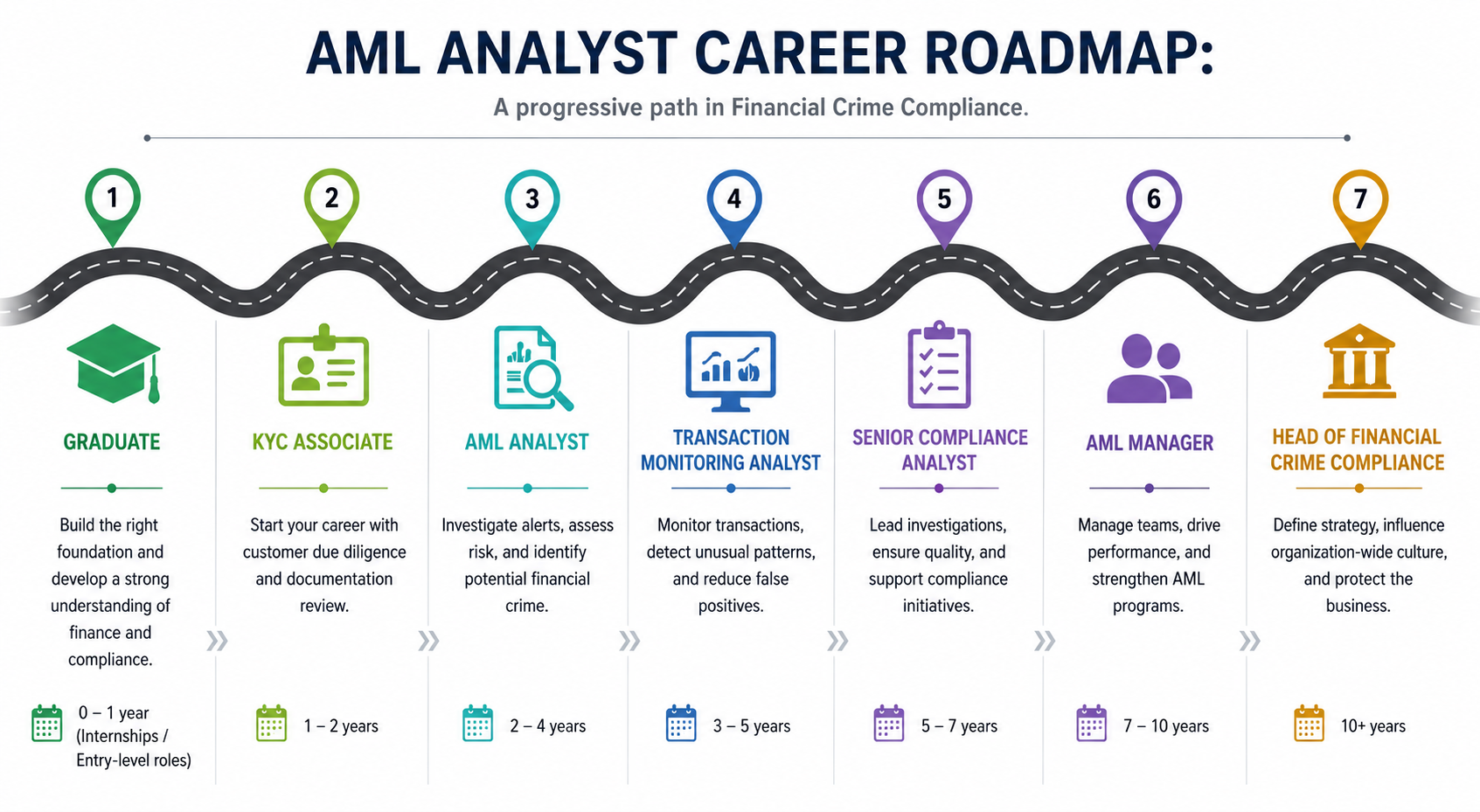
AML and KYC compliance is one of the most in-demand and recession-proof career tracks in the BFSI domain today. As regulators tighten scrutiny and financial crime grows more sophisticated, institutions are actively seeking certified compliance professionals at every level.
| Job Role |
Industry |
Avg. Salary (India) |
Experience Level |
| KYC Analyst / Associate |
Banking, Fintech |
₹3.5 – ₹6 LPA |
Fresher – 2 years |
| AML Compliance Analyst |
Bank, NBFC |
₹5 – ₹9 LPA |
2 – 4 years |
| Transaction Monitoring Officer |
Banking, Insurance |
₹6 – ₹11 LPA |
3 – 5 years |
| Compliance Manager |
Bank, Fintech, MNC |
₹10 – ₹18 LPA |
5 – 8 years |
| Financial Crime Investigator |
Consulting, Banking |
₹8 – ₹15 LPA |
4 – 7 years |
| Chief Compliance Officer |
Large Bank, MNC |
₹25 – ₹50 LPA |
10+ years |
Companies That Hire Vskills AML KYC Certified Professionals
Vskills Certified AML-KYC Compliance Officers can find employment in all kinds of finance and banking companies, big or small, since maintaining AML and KYC compliance is crucial for them.
Companies Include: HDFC Bank, ICICI Bank, Axis Bank, Kotak Mahindra Bank, Standard Chartered, Yes Bank, KPMG, Deloitte, EY, PwC, Paytm, PhonePe, Razorpay, and hundreds of NBFCs and compliance consulting firms across India.

What You Get with Your Certification
| Benefit |
What It Means for You |
| Government Recognition |
Carry a credential that no private certification body in India can match for official credibility. |
| Lifetime Valid Certificate |
Earn it once — your certificate never expires and requires no renewal fee. |
| Lifetime e-Learning Access |
Access all course content and future updates on the LMS at no extra cost, forever. |
| Job Profile Tagging |
Your profile is flagged as certified to recruiters on one of India's largest job portals. |
| Lifetime Job Support |
Access job listings, placement assistance, and career guidance even years after certification. |
| Online Exam — Anytime, Anywhere |
No exam centre, no fixed date — attempt your exam on your schedule. |
| Corporate Training Available |
Enroll your entire compliance team with bulk pricing and customized delivery. |
AML KYC Table of Contents
https://www.vskills.in/certification/certified-aml-kyc-compliance-officer-table-of-contents
AML KYC Sample Questions
https://www.vskills.in/certification/certified-aml-kyc-compliance-officer-sample-questions
AML KYC Practice Questions
https://www.vskills.in/practice/aml-kyc
AML KYC Tutorials
https://www.vskills.in/certification/tutorial/aml-kyc/
AML KYC Interview Questions
https://www.vskills.in/interview-questions/accounting-banking-finance-interview-questions/aml-kyc-interview-questions
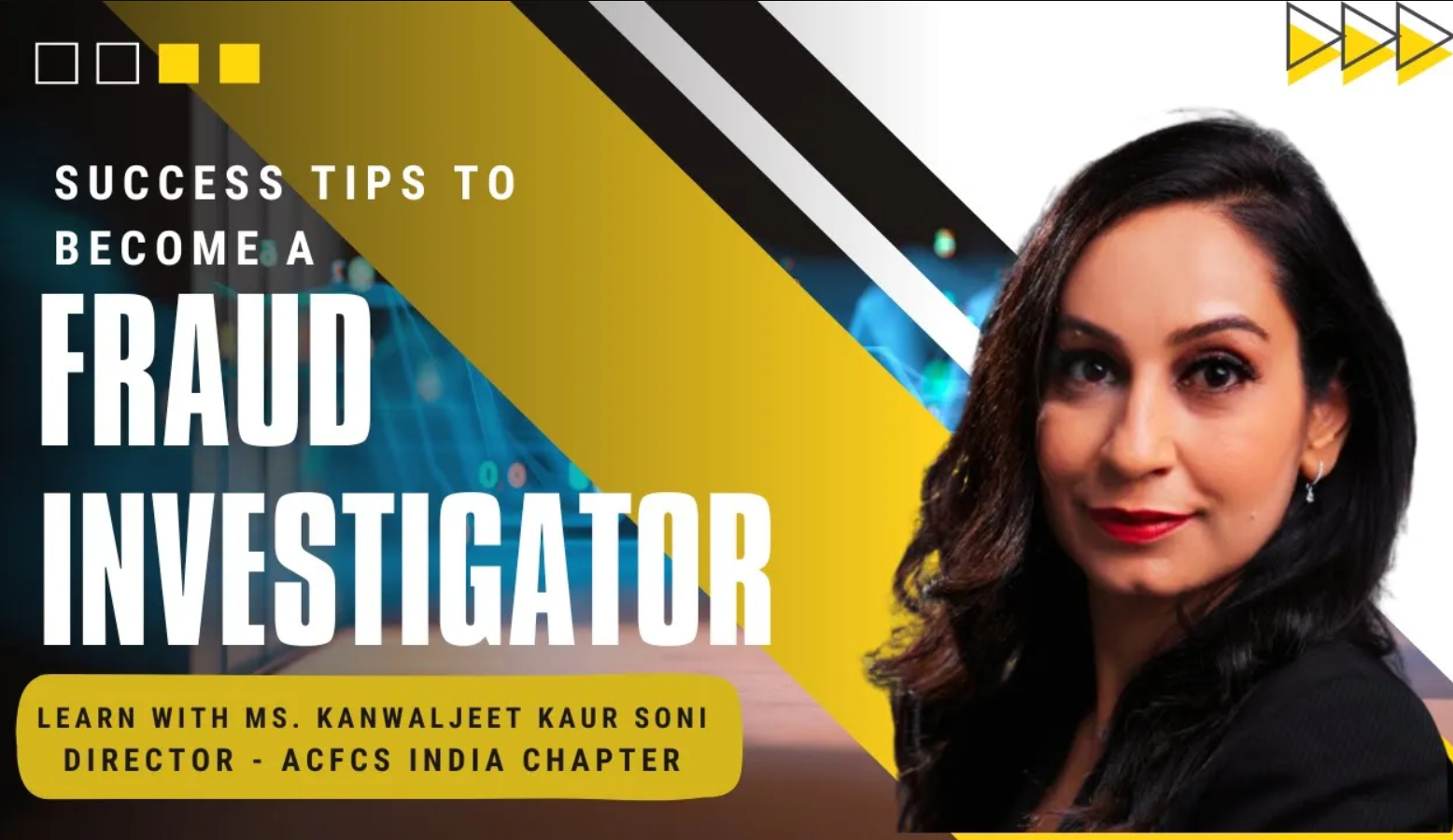
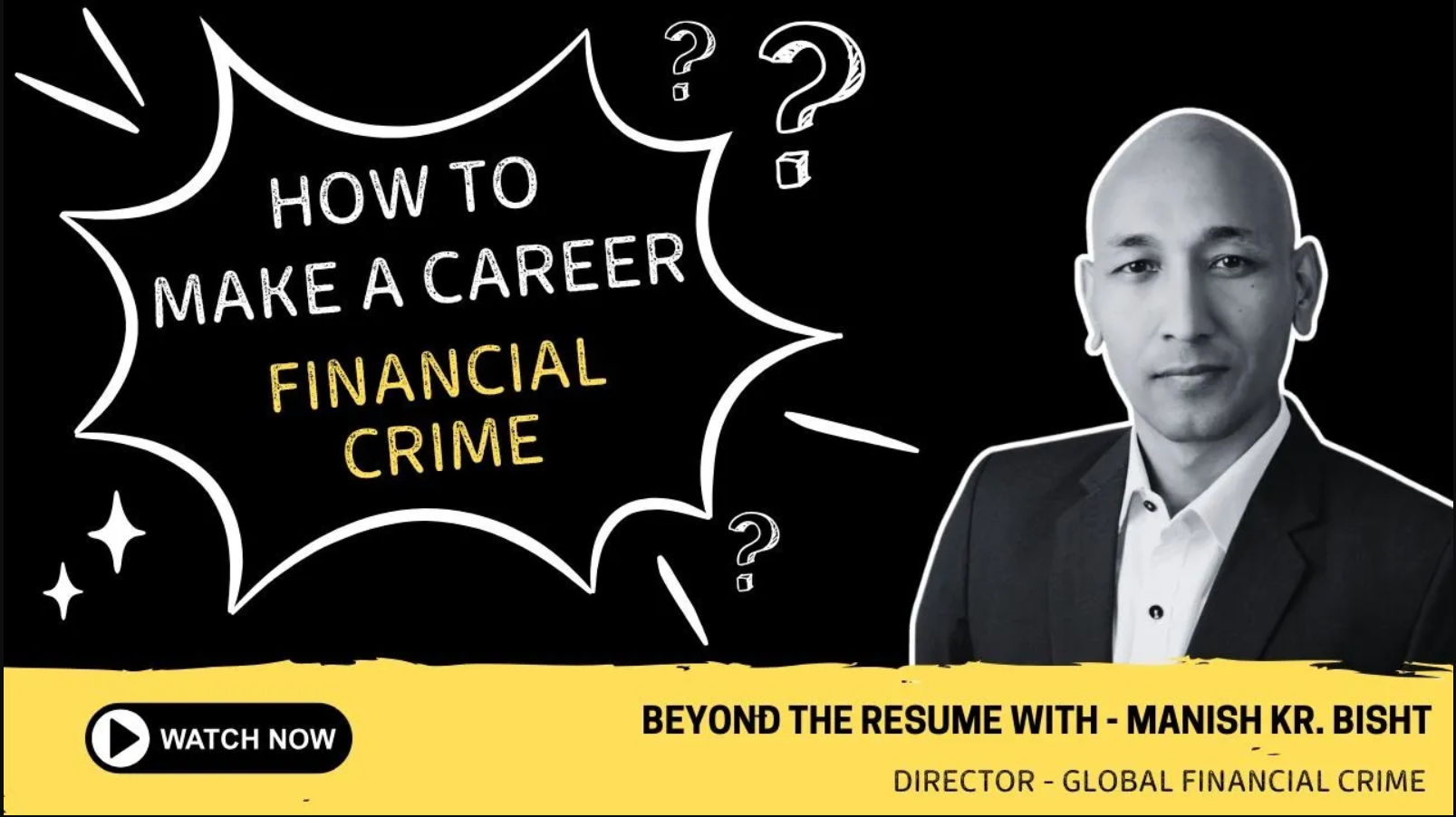
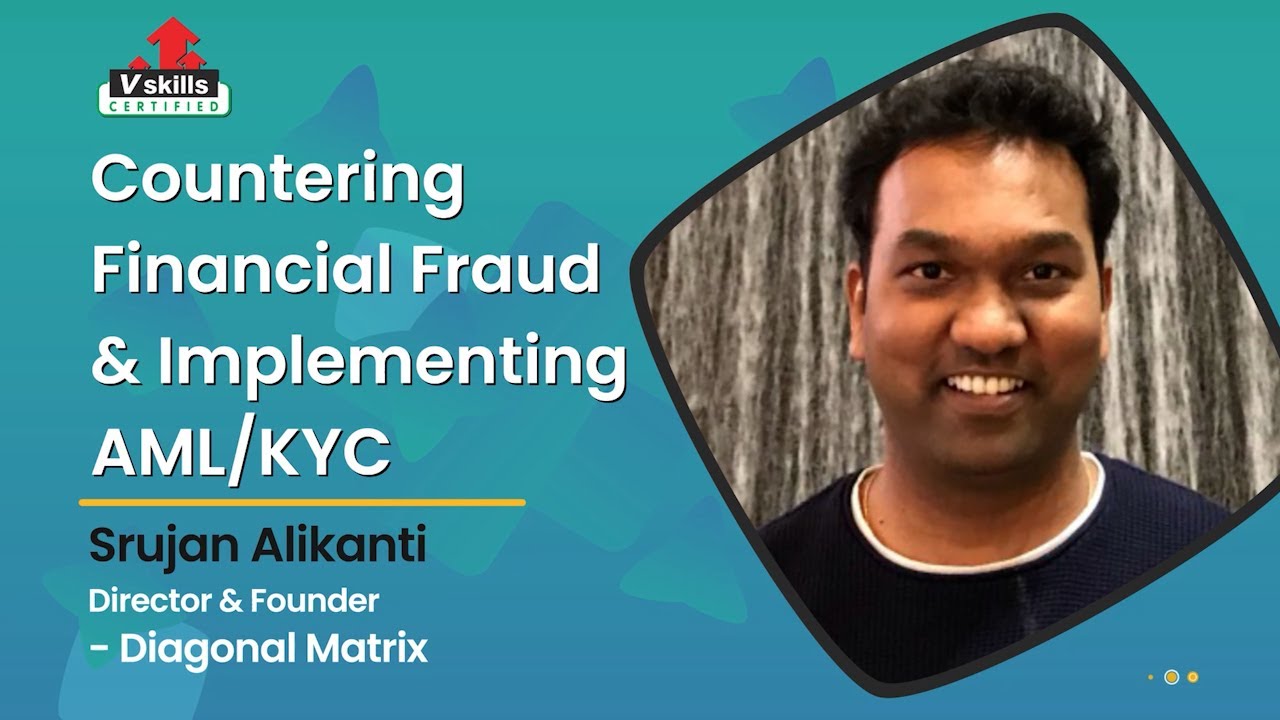
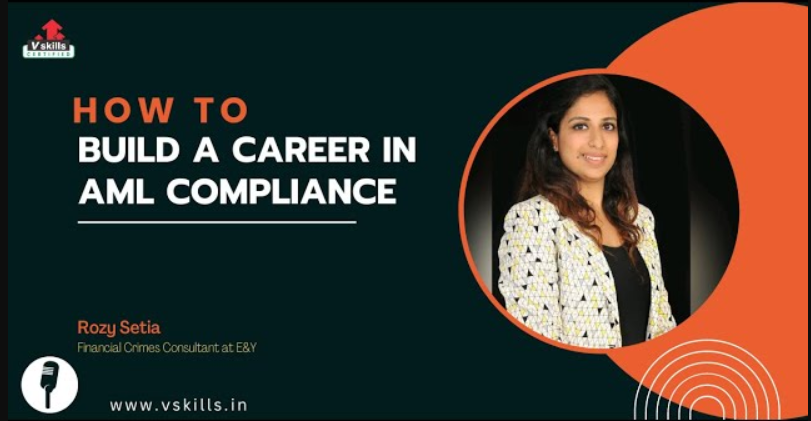
Domain Expert Interview Series
TABLE OF CONTENT
Module 1: Financial Crime — Concepts & Legal Foundations
- Core Concepts
- The Legal Framework
- The Global Regulatory Journey
- Practical Application
Module 2: Laundering Process, Methods & Modern Typologies
- The Three-Stage Model — Deep Dive
- Traditional Laundering Methods
- Hawala & Informal Value Transfer Systems
- Digital-Era Typologies
- Terrorist Financing & Proliferation Financing
- Building a Red-Flag Library for Investigative Use
Module 3: Global Regulatory Architecture
- The FATF Framework
- Global Standard-Setting Bodies
- Major Regional and National Regimes
- International Cooperation Architecture
- Comparative Regulatory Analysis
Module 4: Indian Regulatory Deep-Dive
- The RBI KYC Framework
- SEBI, IRDAI, and PFRDA KYC Frameworks — Sectoral Variations
- Records, Reporting, and Governance
- Enforcement and Judicial Precedents
Module 5: Customer Due Diligence — Advanced Practice
- Customer Acceptance Policy
- Customer Identification Procedure
- Standard vs. Simplified vs. Enhanced Due Diligence
- Politically Exposed Persons
- Beneficial Ownership and UBO Identification
- Source of Wealth vs. Source of Funds
- Adverse Media Screening
- Ongoing and Continuous CDD
- Customer Risk Scoring Models
Module 6: Digital Onboarding & KYC Technology
- Aadhaar-Based eKYC and OTP-Based eKYC
- Video Customer Identification Process (V-CIP)
- Central KYC Records Registry (CKYCR) and CERSAI
- DigiLocker Integration in KYC Workflows
- API-Driven Onboarding and the Account Aggregator Framework
- Biometric Authentication and Liveness Detection
- Digital Identity Fraud
- Data Protection in KYC
Module 7: Sanctions Compliance
- Global Sanctions Regimes
- Designing a Sanctions Compliance Program
- List-Based Screening vs. Risk-Based Screening
- Name-Matching Algorithms
- Sectoral Sanctions, Secondary Sanctions, and Extraterritorial Risk
- Trade Sanctions, Export Controls, and Dual-Use Goods
- Sanctions Evasion Typologies
- Case Studies — Major Sanctions Enforcement Actions
Module 8: Transaction Monitoring & Financial Crime Analytics
- Transaction Monitoring System Design
- Threshold Setting, Tuning, and ATL/BTL Testing
- Rule-Based vs. AI/ML-Based Monitoring
- Network Analysis and Link-Analysis Techniques
- Alert Management
- False Positive Reduction Strategies and Model Governance
- Behavioral Analytics and Anomaly Detection
- Case Management Systems
- Model Risk Management
Module 9: Virtual Assets, Crypto & Fintech AML
- FATF Guidance on Virtual Assets and VASPs
- Travel Rule Implementation
- Wallet Screening and Blockchain Forensics
- Stablecoins
- DeFi Protocols and Unhosted Wallets
- MiCA and Comparable Crypto-Asset Regulatory Regimes
- India’s Regulatory Stance on Virtual Digital Assets
- NFTs, Gaming Economies, and Emerging Laundering Vectors
- Buy-Now-Pay-Later, Neobanks, and Embedded Finance
Module 10: Trade-Based Money Laundering & Correspondent Banking
- Correspondent Banking Relationships
- Correspondent Banking Due Diligence Questionnaire
- Wire Transfer Rules
- Trade Finance Documentation Red Flags
- Free Trade Zones and High-Risk Trade Corridors
- De-Risking
Module 11: Sector-Specific AML/KYC
- Banking & NBFC Sector Nuances
- Insurance Sector AML
- Capital Markets & Securities (SEBI KYC, Mutual Funds, PMS)
- Real Estate and DNFBPs
- Payment Aggregators, Prepaid Instruments & Money Service Businesses
- Casinos, Gaming & High-Value Dealers
- The NGO/Non-Profit Sector
Module 12: Investigation, SAR/STR Filing & Forensic Techniques
- Internal Investigation Process
- Suspicious Transaction Report (STR)
- CTR, CCR, and NPO Transaction Reports
- Evidence Gathering & Chain-of-Custody Principles
- Interviewing Techniques for Internal Investigations
- Forensic Accounting Basics
- Coordination with Law Enforcement, ED, and FIU-IND
- Whistleblower Mechanisms & Tipping-Off Prohibitions
Module 13: Enterprise-Wide Risk Assessment & Governance
- Enterprise-Wide AML/CFT Risk Assessment (EWRA)
- Board and Senior Management Accountability
- Principal Officer and Designated Director
- AML Policy, Procedures, and Program Design
- Independent Audit and Compliance Testing
- Regulatory Examination Readiness
- Culture of Compliance
- Outsourcing & Third-Party/Vendor AML Risk Management
Module 14: KYC Lifecycle, Recordkeeping & Data Governance
- Risk-Based Periodic KYC Updation
- The 2025 RBI Amendments in Practice
- Offboarding and Account Closure
- Record Retention Standards
- Data Quality, Deduplication, and Golden Record Management
- The Data Privacy Intersection
Module 15: Emerging Risks & the Future of Financial Crime Compliance
- AI-Driven Fraud & Deepfake-Enabled Social Engineering
- Regtech and Suptech
- Convergence of Fraud and AML Functions
- Cyber-Enabled Financial Crime
- Environmental Crime, Wildlife Trafficking & Emerging Predicate Offences
- ESG and Financial Crime
- Global Regulatory Outlook
Module 16: Career Readiness & Professional Practice
- Career Pathways
- Building an AML/KYC Professional Portfolio
- Resume and LinkedIn Positioning for Compliance Roles
- Interview Preparation
- Report Writing and Regulator/Board Communication Skills
Module 17: Capstone Practicum
- Case Study 1: Full Customer Risk Assessment and EDD Workflow
- Case Study 2: Transaction Monitoring Alert Investigation → STR Drafting
- Case Study 3: Designing an Enterprise-Wide Risk Assessment
- Case Study 4: Cross-Border Crypto Transaction Exercise
- Case Study 5: Mock Regulatory Examination

 ►
►
 ►
►
 ►
►
 ►
►
 ►
►
 ►
►
 ►
►
 ►
►
 ►
►
 ►
►
 ►
►
 ►
►
 ►
►
 ►
►